The bollard itself is only half the system. The control method determines how smoothly vehicles move through your entrance, how secure the perimeter actually is, and how much ongoing management the system requires. Getting this right matters more than most people realize.
Remote control is the simplest option and the one most installations start with. A handheld transmitter sends a radio signal to a receiver connected to the bollard control board. The operator presses a button, the bollard rises. Press again, it lowers. Range varies by transmitter power and antenna placement, but most systems work reliably within 30 to 50 meters. The advantages are low cost and simplicity of installation. The disadvantage is that anyone with the right frequency transmitter can operate your bollards. Basic remotes offer no user identification or logging. UPARK supplies encrypted remote controls as standard equipment, which prevents unauthorized cloning of the radio signal. Each remote is paired to the system at the factory or during commissioning.
RFID access uses a card or tag that the driver holds near a reader mounted at the entrance. The reader identifies the tag, checks it against an authorized list, and triggers the bollard if access is granted. This is a step up from remotes in terms of security because each tag has a unique ID. You can add or remove individual tags from the authorized list without affecting other users. RFID systems also produce access logs, so you know who passed through and when. The main limitation is range. The driver needs to be within about a meter of the reader, which means a reader post must be installed at each entry point. RFID works well for employee parking, gated communities, and commercial sites where the same vehicles pass through regularly.
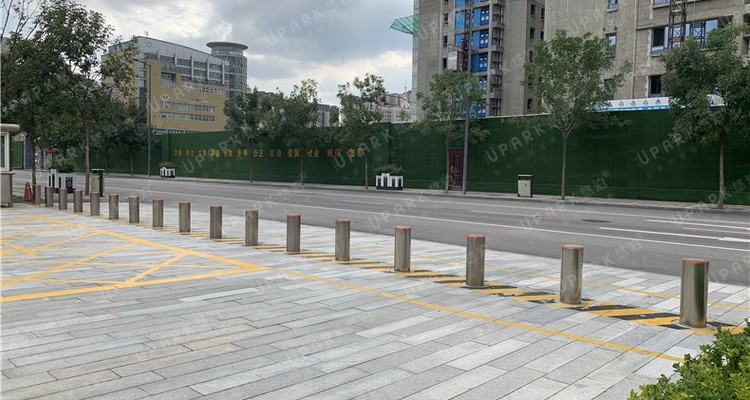
License plate recognition, also called ANPR or LPR depending on your region, is the hands-free option. A camera mounted above the entrance reads the vehicle's license plate as it approaches. The system checks the plate number against a database and opens the bollard automatically for authorized vehicles. The driver does not need to roll down the window, press a button, or hold a card out the window. The vehicle simply drives up and the bollard rises. ANPR systems log every plate that passes, authorized or not, which provides valuable security data. The technology has improved significantly in recent years. Modern cameras read plates accurately at speeds up to 30 kilometers per hour and work in most weather conditions including rain and moderate fog. UPARK integrates license plate recognition as a standard control option on its automatic bollards, with cameras that achieve 99.8 percent recognition accuracy according to the manufacturer's specifications.
Mobile app control is becoming more popular as facility management moves toward smartphone-based systems. The user opens an app, taps a button, and the bollard responds. Apps can be configured for individual users or for site managers who need to control access remotely. The advantage is that most people already carry a smartphone, so there is no additional hardware to distribute. App-based systems can also send push notifications when a bollard is activated, which is useful for security monitoring. UPARK supports app-based control through its product line and can integrate with third-party building management apps via standard protocols.
Integration with existing security systems matters for larger facilities. If your site already has access control, CCTV, or building management software, the bollard system should connect to it rather than operating as an island. Common integration points include relay outputs that trigger from an existing access control panel, contact closures that report bollard status back to a central monitoring system, and Modbus or TCP/IP communication for advanced setups. A well-integrated system allows a security operator to see bollard status on the same screen as camera feeds and door access logs. UPARK's control electronics support multiple integration protocols, and the engineering team works with installers to match the specific requirements of each project.
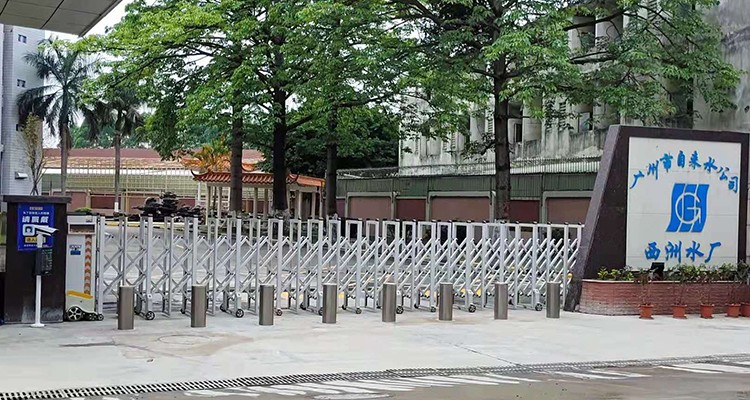
For sites that need traffic light coordination, some bollard systems include signal outputs that control warning lights or gates. When the bollard rises, a red light activates. When it lowers, the light turns green. This prevents vehicles from approaching while the bollard is still in motion. The coordination logic can be as simple as a timed relay or as complex as a PLC-driven sequence that accounts for multiple lanes and pedestrian crossings.
Choosing the right control method depends on traffic volume, security requirements, and budget. A small residential complex may be fine with remotes. A logistics depot with hundreds of daily truck movements will want ANPR or RFID with logging. A government facility needs integration with the broader security infrastructure. The bollard hardware should support your chosen control method without requiring expensive aftermarket adapters.
UPARK's automatic bollards support remote control, RFID, license plate recognition, and mobile app operation as standard options, with integration support for professional security systems. To discuss which control setup fits your site, contact the UPARK engineering team at [email protected].
call us :
+86 18206096507 e-mail : [email protected]




 ipv6 network supported