If you manage a facility with automatic bollards, you already know they work hard day after day. Cars hit them, rain soaks them, and temperature swings stress the internal parts. The question is not whether they need maintenance, but how much.
The honest answer depends on what kind of bollards you have. Hydraulic systems need oil checks, hose inspections, and drainage monitoring. Electromechanical units like the ones UPARK builds skip most of that. Either way, a structured inspection routine catches small problems before they become expensive repairs.
Daily visual checks take about two minutes per unit. Walk the line and look for physical damage on the column surface, debris stuck around the cover plate, and any fluid pooling nearby. Fluid leaks are the number one red flag for hydraulic bollards and basically a non-issue for sealed electric units. If the bollard rises and lowers normally when triggered, move on. If it hesitates or makes grinding sounds, mark it for follow-up.
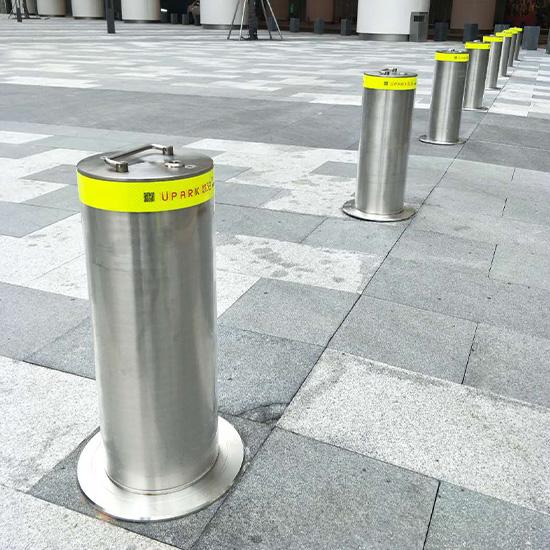
Weekly tasks add a couple more steps. Test each bollard with the remote control, RFID reader, or whatever access method your site uses. Pay attention to cycle time. A UPARK electromechanical bollard rises in about 5 seconds and drops in 3. If that starts creeping up to 7 or 8 seconds, something is wearing down. Clean the sensor eyes on your access control hardware. Dust and rain residue build up quickly, especially at sites near construction or heavy traffic. Check that LED indicator lights are working on each unit.
Monthly inspections go deeper. Open the control cabinet and look for loose wire connections or signs of corrosion on terminal blocks. For hydraulic installations, check the oil level in the power unit and inspect hydraulic hoses for cracking or bulging. Look at the drainage channels around the foundation. Clogged drainage is the most common cause of premature bollard failure, and it is entirely preventable. Electromechanical bollards with IP67 sealing, like UPARK's standard units, do not require drainage systems at all, which eliminates this whole category of problems. Lubricate any exposed moving parts with a weather-resistant grease. Check the ground fault circuit interrupter if your installation uses one.
Quarterly, run a full load test. Cycle each bollard ten times in succession and measure whether the motor or power unit overheats. UPARK's 36V DC motors are rated for continuous operation without thermal shutdown, but older or lower-quality units may struggle. Verify that the emergency manual override works on every unit. You do not want to discover that the manual release is seized the day a power outage coincides with a security incident.

Once a year, schedule professional servicing. A technician should open the housing, inspect the drive mechanism, replace any seals showing wear, and test the impact resistance of the foundation anchoring. For hydraulic systems, this is when you replace the hydraulic oil and filters. For electric bollards, the service visit is usually quicker because there are fewer consumable parts. Ask the technician to firmware-update the control board if a new version is available. It sounds minor, but manufacturers occasionally push optimizations for cycle time and power efficiency.
The difference between a bollard that lasts five years and one that lasts fifteen usually comes down to this checklist. Sites that follow a routine spend less on repairs and almost never face unexpected downtime. And if you are in the market for new bollards, choosing sealed electromechanical units with IP67 protection means you can scratch hydraulic oil, drainage maintenance, and hose replacement off your list entirely.
For more details on low-maintenance automatic bollards, or to discuss your site's specific maintenance requirements, contact the UPARK team at [email protected].
call us :
+86 18206096507 e-mail : [email protected]




 ipv6 network supported