If you are pricing a perimeter security project, whether it is a government compound in Riyadh, a pedestrian zone in London, or a warehouse entrance in Sydney, the first real question is always the same: what will the bollards actually cost?
The short answer is that prices range from under $150 for a basic fixed steel post to over $12,000 for a single crash-rated automatic rising bollard. The long answer depends on what you need the bollard to do, where it will be installed, and how many you are buying.
This guide pulls together published pricing from manufacturers like Reliance Foundry, Bollard Boss, Bison Security Posts, and TurnIQ, along with wholesale data from Alibaba, to give you a clear picture of what to expect when budgeting for bollards.
The table below covers the most common bollard types. All prices are in USD and exclude installation:
These are equipment-only prices. Installation can easily add another 30% to 100% on top, depending on the type of bollard and site conditions.
Four variables matter more than anything else.
Material. Carbon steel is the cheapest option. A basic 4-inch Schedule 40 steel pipe bollard starts around $130. Step up to stainless steel (304 or 316 grade) for corrosion resistance and you are looking at $200-$600 for fixed units. Cast iron or architectural sleeves push the price to $800 or more per post.
Crash rating. This is the biggest single cost multiplier. The physical crash test alone costs money, and manufacturers pass that cost along. An ASTM K4 rated bollard starts around $2,000. An M50/K12 bollard begins at roughly $3,700. European-certified automatic bollards (IWA 14-1 or PAS 68) run from $5,999 to $15,000 per unit.
Operating mechanism. Going from fixed to removable adds about 50% to the price. Going from fixed to automatic is a much bigger jump. Automatic rising bollards include motors, pumps, control electronics, and safety sensors. They typically cost five to ten times more than a comparable fixed post.
Quantity. Volume discounts apply, though they are modest. Expect roughly 5-10% off for 10-25 units, 10-15% for 25-50, and 15-30% for 100+.
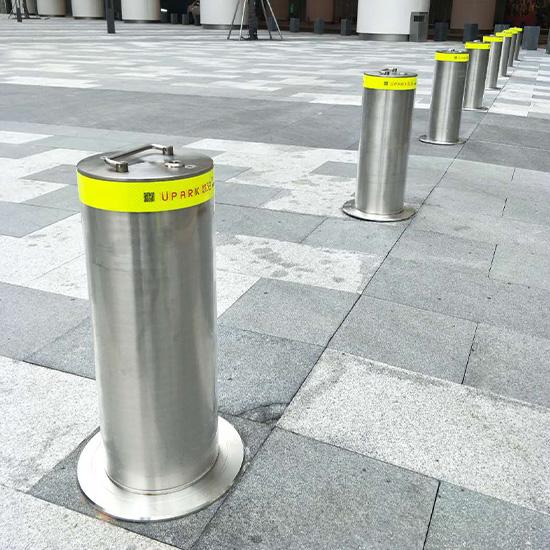
This is where costs get serious. Automatic rising bollards retract into the ground to let authorized vehicles pass, then rise back up to block traffic.
Electromechanical bollards use an electric motor and are the cheaper automatic option. From established brands, expect $1,500 to $3,500 per unit.
Hydraulic bollards use a pump-driven system. They operate more smoothly and handle higher traffic volumes, which is why they are the default choice for high-security sites. Established brands charge $4,000 to $6,000 for standard hydraulic bollards, with heavy-duty crash-rated models reaching $7,000 to $12,000+.
One thing that catches buyers off guard: hydraulic systems need a central pump station ($3,000-$8,000) and a control cabinet ($1,500-$5,000) that serves all bollards on that lane.
Crash-rated bollards have been physically tested to stop a vehicle of a specific weight at a specific speed. Government buildings, embassies, military bases, airports, and critical infrastructure typically require them.
The American standard is ASTM F2656. K4 fixed bollards start around $2,000-$3,200. K12 fixed bollards start around $3,700-$5,000.
The European equivalents are IWA 14-1 and PAS 68. HVM Bollards lists IWA 14-1 PAS 68 tested automatic bollards at $5,999 per unit (minimum 10 pieces). Shallow-mount versions command premium prices of $6,000 to $15,000.
For fixed bollards, a 10-unit project in the US comes out to roughly $775-$1,500 per unit installed depending on size.
For automatic rising bollards, civil works alone run $3,000 to $6,000 per lane. A real-world data point: the city of Knoxville, Tennessee installed 17 retractable bollards at about $5,277 per unit including all civil works, mechanical components, and pavement restoration.
Decorative sleeves add $1,145 to $2,257 per unit. Control system components (RFID readers, loop detectors, keypads, safety photocells) add $500-$2,000 per access point. International ocean freight runs $500-$2,000 per pallet.
Budget $200-$1,500 per year for maintenance of automatic bollards. Hydraulic systems need periodic oil changes ($150-$400 per service).
For a typical commercial or industrial perimeter security project, budget $2,000 to $5,000 per bollard position including equipment and professional installation. For high-security crash-rated applications, the per-position budget starts at $6,000 and can exceed $20,000.
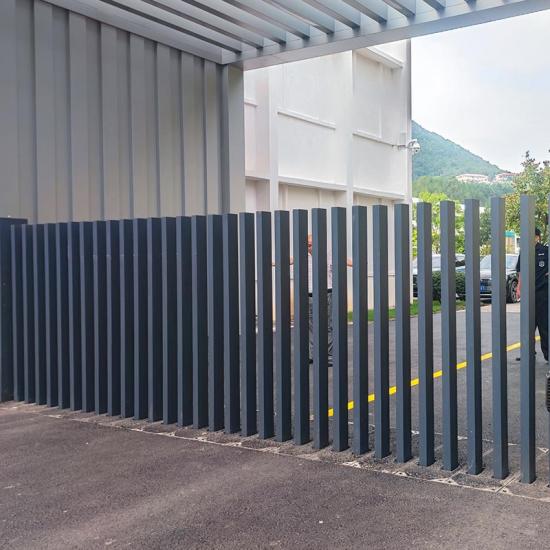
If you have a specific project in mind and need a detailed quotation, contact UPARK with your site conditions and security requirements. We manufacture bollards, automatic barriers, and fence gates, and we ship to projects worldwide.
call us :
+86 18206096507 e-mail : [email protected]




 ipv6 network supported