Hydraulic bollards have been the default choice for serious perimeter security for decades. They work. Nobody argues that. But whether they're the right choice for your site is a different question — and for most properties, the answer has changed.
What Makes Hydraulic Different
A hydraulic bollard uses pressurized fluid to push the post up and retract it. The mechanism is powerful and well-understood. For decades, if you needed something that could stop a truck cold, hydraulic was the obvious answer.
The Real Advantages
High-impact resistance is where hydraulic genuinely earns its reputation. The fluid system absorbs and distributes collision force in ways that gear-driven mechanisms handle less efficiently. For government perimeters, airport security lanes, or anywhere a vehicle attack is a real threat with strict crash rating requirements — hydraulic makes sense.
High-cycle-count reliability is another legitimate strength. On a busy commercial entrance cycling thousands of times per day, hydraulic systems handle the wear differently than some electric alternatives.
The Problems That Come With It
Installation costs more, takes longer, and requires more civil work. A hydraulic system needs a pump unit, reservoir, underground lines, and careful pressure calibration. More components, more points of failure, more labor.
Hydraulic fluid leaks are the biggest operational problem. Even minor leaks contaminate surrounding soil and point to a system under stress. In cold weather, the fluid thickens and slows — sometimes enough to cause missed cycles or errors. You don't have this problem with an electric bollard.
Maintenance requires trained technicians. Fluid replacement, pressure checks, seal inspections — these aren't tasks a facilities team handles in-house. Every service call costs more and takes longer.
Hydraulic vs Electric — Where Things Actually Stand
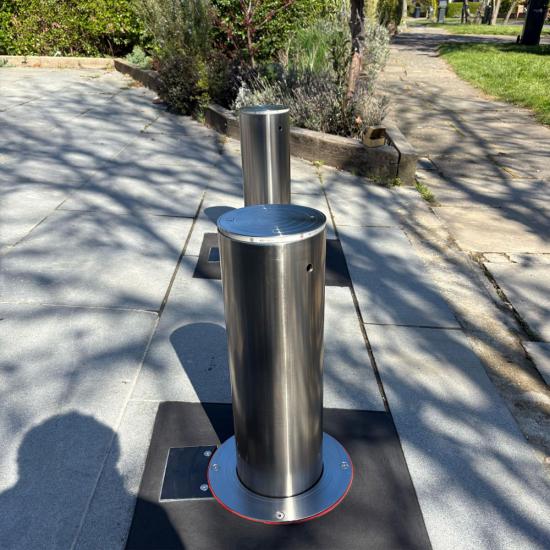
For the vast majority of properties — commercial car parks, residential complexes, business campuses, shopping areas — electric automatic bollards cover the security requirements without the maintenance overhead. Modern electromechanical systems handle high cycle counts, install faster, and need nothing more than occasional inspection.
If flexibility matters — seasonal access changes, temporary closures, sites that reconfigure — removable electric bollards are worth a closer look.
The Bottom Line
Hydraulic bollards are not obsolete. If your site has genuine crash-rating requirements beyond what electric systems certify for, or if you're running extremely high cycle counts in a mission-critical application, they belong in the conversation.
For everyone else, the calculus has shifted. Electric bollards have gotten good enough that the operational complexity of hydraulic is hard to justify. Lower installation cost, no fluid, no cold-weather degradation, cheaper maintenance. Most buyers who look at both side by side end up going electric — not because hydraulic is bad, but because the tradeoffs stopped making sense for their use case.
call us :
+86 18206096507 e-mail : [email protected]




 ipv6 network supported