Martyn's Law is the popular name for the UK's Protect Duty, legislation born from the 2017 Manchester Arena attack in which 22 people were killed, including Martyn Hett. The law places a legal duty on those who operate public venues and spaces to take proportionate steps to protect the public from terrorism — including vehicle-borne attacks. After receiving royal assent in 2023, the duty moves into its enforcement phase in spring 2027. For the first time, considering hostile vehicle mitigation (HVM) is not just good practice for UK venues; for many of them it is a legal obligation.
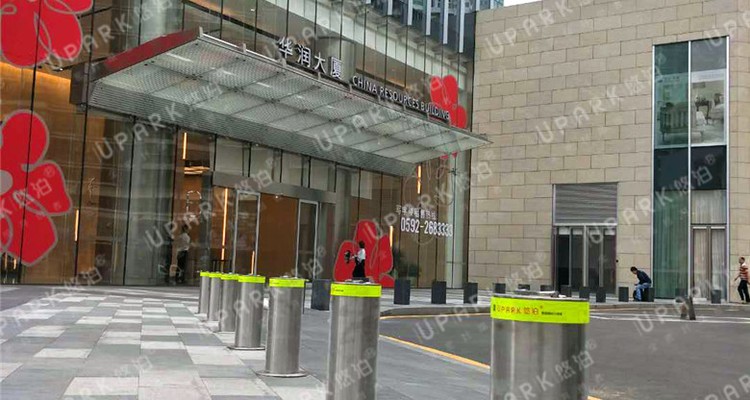
The duty is tiered by capacity and risk. The standard (or express) tier covers premises and events open to the public with 200–799 people. The enhanced tier applies above that threshold and to higher-risk locations. In practice this reaches a very wide set of operators: concert venues, stadiums and arenas; shopping centres and markets; places of worship; schools and universities; hospitals; transport interchanges; town and city squares; and government and civic buildings. The common thread is crowded places — exactly the environments where a vehicle driven into a crowd causes the worst outcomes.
The duty is framed around taking steps that are “reasonably practicable.” That wording matters: it does not demand that every venue become a fortress, but it does require operators to think about vehicle-borne threats and document proportionate measures. A venue that has done nothing — no risk assessment, no physical control at vehicle access points — will struggle to show it met the duty. A vehicle is one of the simplest weapons to use and one of the hardest to stop once it is moving. That is why HVM — measures that physically prevent a vehicle from reaching a crowd — sits at the centre of any credible Protect Duty response.
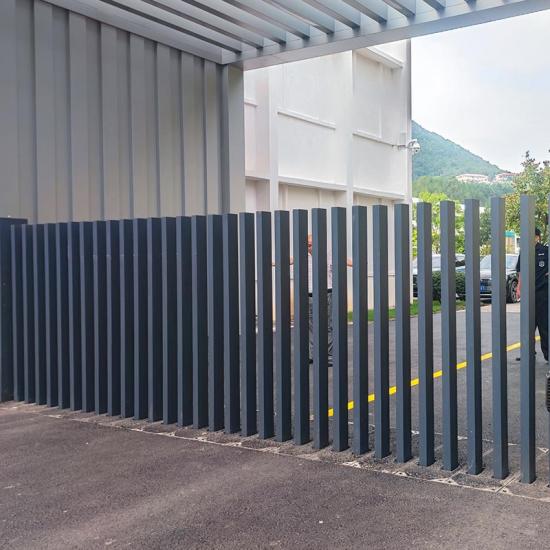
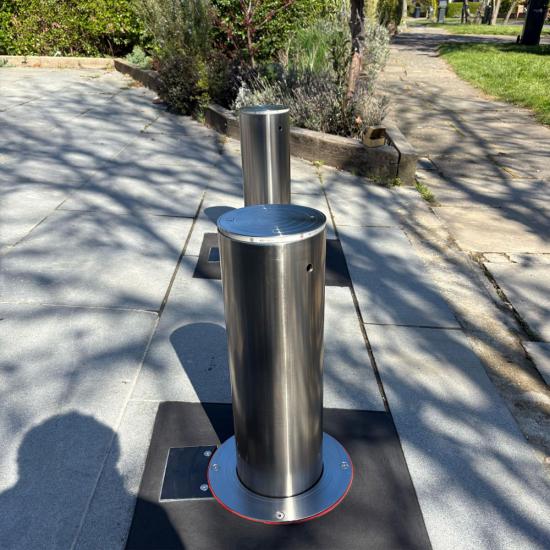
Public spaces need to stay open and accessible. You cannot wall a town square or a school drop-off zone. That is why automatic bollards fit better than gates or walls: Automatic / retractable bollards lower for deliveries, emergency vehicles and event load-in, then rise to deny unauthorized vehicle access the rest of the time. Fixed bollards provide permanent denial at building frontages, pedestrian zones and queue areas. Removable and manual bollards cover occasional-access points where full automation is not justified. All of them share one advantage over a gate: there is no large opening to forget to close, and a crowd is protected even when staff are busy elsewhere.
For the standard tier, the duty focuses on awareness and simple, proportionate measures rather than engineered HVM mandates — but physical controls are strongly recommended where vehicle access meets a crowded space. For the enhanced tier, with larger crowds and higher risk profiles, documented, engineered HVM is far more likely to be expected. Either way, specifying PAS 68 / IWA 14 rated bollards signals that an operator took the vehicle-borne threat seriously and chose a tested, certifiable control rather than a decorative post. Regulators and insurers read that difference.
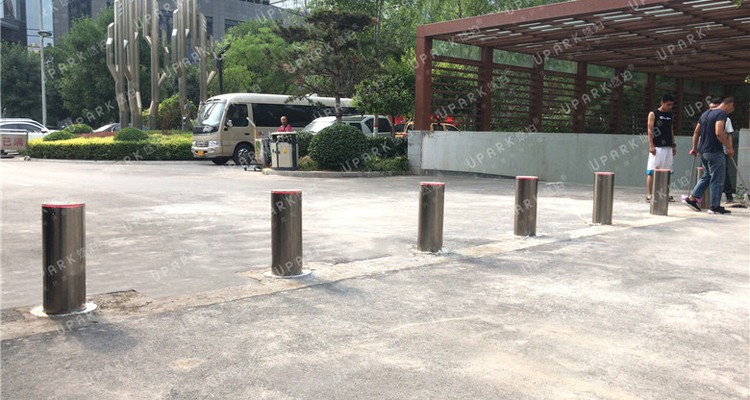
UPARK automatic bollards are designed for exactly these environments. The 36V electromechanical screw-driven mechanism is low-voltage and safe for sites with the public and children nearby. There is no pressurised fluid to leak, which keeps the streetscape clean and maintenance simple. With an IP67 rating they survive British weather without leaks or freeze-ups, and they integrate with the access-control and emergency-override systems venues already run. For a school, that means a secure drop-off that opens for buses and closes for the school day. For a square, it means a pedestrian zone that stays walkable yet protected. For a stadium, it means a forecourt that clears for ambulances and locks down for match days.
If spring 2027 is on your calendar, start now: 1) Complete a Protect Duty risk assessment that explicitly covers vehicle-borne attack. 2) Map vehicle access points that meet crowded space. 3) Specify PAS 68 / IWA 14 rated bollards at those points, automatic where access must stay flexible. 4) Integrate with access control and document the design. 5) Train staff and review annually. Martyn's Law is about remembering victims by making crowded places harder targets. Bollards are one of the most practical ways to do that.
Meeting the duty does not require a fortress — it requires proportionate, documented, physical control at the right points. contact the UPARK team to review your vehicle access points and specify a PAS 68 / IWA 14 rated automatic bollard layout that fits your tier, your crowd and your budget.
call us :
+86 18206096507 e-mail : [email protected]




 ipv6 network supported