The late-summer getaway is when service areas feel it. A normal rest stop already mixes coaches, lorries, caravans, cars and walking families; add a holiday weekend and the bays overflow, cars spill into lorry spaces, and people cross live lanes to reach the toilets. A service area is a car park that thinks it is a street, and it needs street-grade control. Bollards zone it without pouring a single wall.
The rest-stop scramble
The problems are predictable: cars camp in HGV bays so trucks idle on the ramp, coaches block the petrol island, and pedestrians weave between moving vehicles because there is no defined walking edge. None of it is malice; it is a space with no physical rules. A post supplies the rules.
Fixed posts split car and lorry
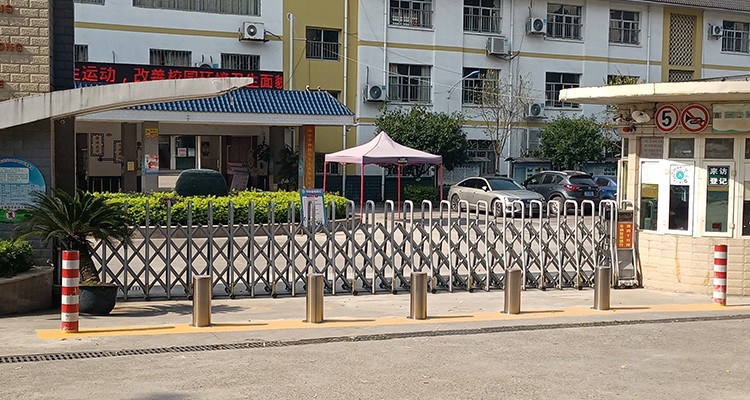
A run of fixed posts draws the hard line between the car courts and the lorry park, and wraps a continuous pedestrian island along the frontage so families walk clear of reversing trailers. The fixed bollards page sets out the spacings that hold a heavy vehicle yet keep the walk open.
Automatic posts for the vehicles that belong
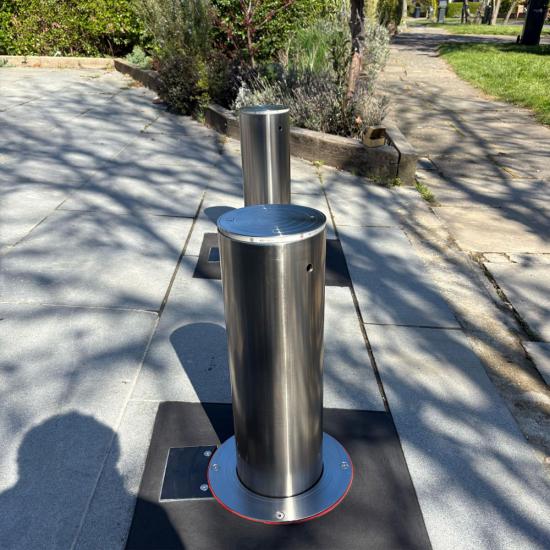
At the ambulance bay, the staff gate and the fuel-delivery mouth, automatic posts drop for the vehicle that has business there and rise after. Card, fob or a link to the site system runs it, and the same control logs each opening for the operator. One small cabinet feeds a whole row, so the site is not paying a marshal to stand at every gate. The automatic bollards range covers the drive and control.
Built for the weather and the cycling
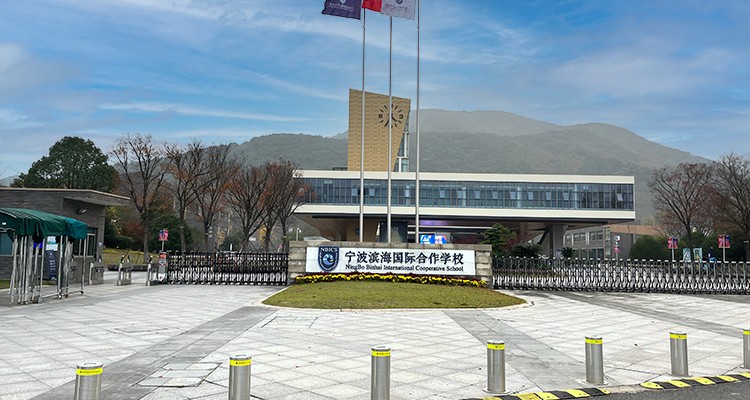
A motorway rest stop runs every hour and every season. A sealed electromechanical screw drive has no oil to thin in a heatwave and no pump to cook through a bank-holiday afternoon of constant cycling, and the IP68 casing shrugs off the storms that roll across an exposed site. It runs on 36V DC, the safe choice where crowds stand metres from the mechanism.
Expand without closing the lot
Service areas get rebuilt while still open, and a trench through a live forecourt is a nightmare. A sealed, low-voltage, pit-free unit drops in beside the running bays, so the upgrade happens around the traffic instead of over it. When the layout is still shifting, our team can talk through the UPARK approach to phased access control.
The bottom line
A rest stop cannot supervise every bay every second. A bollard line does the zoning for it, quietly, through every getaway weekend. For a site whose users are tired, in a hurry and on foot, that order is the whole point of the stop.
call us :
+86 18206096507 e-mail : [email protected]




 ipv6 network supported