PLC-Based Smart Bollard Control: How Intelligent Traffic Barriers Work
From Standalone Bollards to Intelligent Traffic Control Systems
A single automatic bollard controlled by a pushbutton or remote is useful for basic access control. But modern security and traffic management projects demand more: bollards that communicate with surveillance cameras, coordinate with traffic lights, respond to license plate recognition systems, and report their status to a central building management system.
This is where PLC-based (Programmable Logic Controller) bollard control transforms a standalone security barrier into an intelligent, networked access control node.
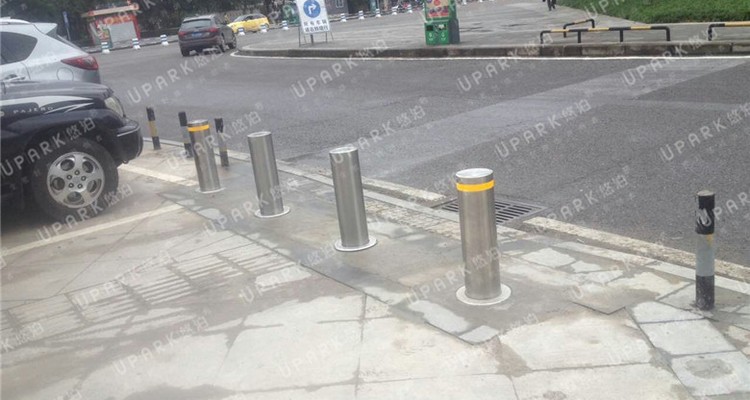
What a PLC Does in a Bollard System
A PLC is an industrial-grade computer designed to withstand harsh environments (dust, temperature extremes, electrical noise) while executing deterministic control logic in real time. In a bollard system, the PLC:
Reads Inputs: Vehicle loops, pushbuttons, RFID readers, fire alarm contacts, surveillance system triggers
Executes Control Logic: 'If RFID authorized AND fire alarm NOT active AND loop detects vehicle → lower bollard'
Controls Outputs: Bollard raise/lower relays, traffic light signals, alarm sirens, gate arm motors
Communicates: Reports status to SCADA, BMS, or security management system via Modbus RTU/TCP, BACnet, or proprietary protocols
Intelligent Bollard Control Scenarios Enabled by PLC
Scenario 1: Automatic License Plate-Based Access
Camera captures license plate → LPR software looks up plate in whitelist → authorized → PLC receives 'lower' signal → bollard lowers → vehicle passes → loop detector confirms passage → bollard raises. Total time: 2-3 seconds. No human intervention required.
Scenario 2: Fire Alarm Integration
Fire alarm panel contact closes → PLC receives emergency input → ALL connected bollards lower immediately → Traffic light turns GREEN → Access granted sign illuminates. The PLC ensures emergency egress is never blocked by a raised bollard.
Scenario 3: Anti-Tailgating Protection
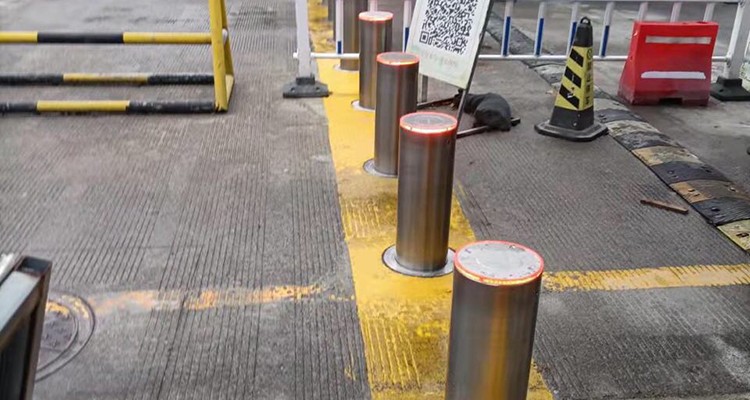
Entry loop detects vehicle → bollard lowers → vehicle passes → exit loop confirms passage → bollard raises. If a second vehicle attempts to tailgate through before bollard raises, the exit loop detects it and the PLC triggers an alarm and CCTV recording.
Scenario 4: Traffic Flow Coordination
At multi-lane facilities, the PLC coordinates bollards with traffic signals to prevent lane conflicts. Example: truck lane bollard lowers only when the truck signal is GREEN and pedestrian crossing is RED.
Communication Protocols for Bollard PLC Integration
Dry Contact (Relay): Simplest on/off control; universal compatibility
RS485 / Modbus RTU: PLC-to-bollard controller; reliable over long distances, low cost
TCP/IP (Modbus TCP): Networked BMS integration; standard IT infrastructure, remote monitoring
CAN Bus: Multiple bollards on one bus; high-speed, minimal wiring
UPARK PLC-Ready Bollard Controllers
UPARK automatic bollard control units are designed for seamless PLC integration. Standard interfaces include:
Dry contact I/O: Raise, lower, emergency lower, status feedback (raised/lowered/fault)
RS485 port: Modbus RTU protocol for PLC communication
TCP/IP Ethernet: Direct integration with BACnet/IP and Modbus TCP BMS systems
24V DC I/O: Compatible with all major PLC brands (Siemens, Schneider, Mitsubishi, Omron, ABB)
Designing a PLC-Controlled Bollard System: Best Practices
Fail-Safe Logic: Program PLC to lower all bollards on communication loss or power failure
Debounce Vehicle Loops: Apply 200-500ms debounce timers to prevent false triggers
Watchdog Timer: PLC should monitor bollard controller heartbeats; trigger alarm on communication loss
Event Logging: Log all bollard actions (raise, lower, fault, override) with timestamps for security audit
Redundant Communication: For critical sites, use dual-path communication (fiber + wireless backup)
UPARK Smart Bollard Control Solutions
UPARK's engineering team provides complete PLC programming and integration support for intelligent bollard projects. Whether you are integrating with an existing building management system, designing a new checkpoint control system, or building a smart campus access control network, UPARK has the control expertise and equipment to deliver a reliable, code-compliant solution.
call us :
+86 18206096507 e-mail : [email protected]




 ipv6 network supported