Why Schools Are Vulnerable
School grounds are supposed to be safe places. Kids run around during recess, parents drop off and pick up children twice a day, and teachers walk from building to building without thinking twice. But underneath that routine lies a security gap that many school administrators only notice when something goes wrong.
Vehicles have been used in attacks on educational facilities around the world. A car that jumps the curb during morning drop-off, a truck that breaches a perimeter gate during school hours, or even a distracted driver who confuse the gas pedal for the brake—any of these scenarios can turn tragic in seconds. The speed and mass of a vehicle give it an advantage that security guards with walkie-talkies simply cannot match.
The challenge is that schools also need to be accessible. They have delivery trucks, emergency vehicles, parent drop-off lanes, and staff parking areas. You cannot just wall off the entire campus. The solution is to layer security: keep vehicles away from high-risk zones while allowing legitimate traffic through controlled checkpoints.
Drop-Off Zones: The Highest-Risk Area
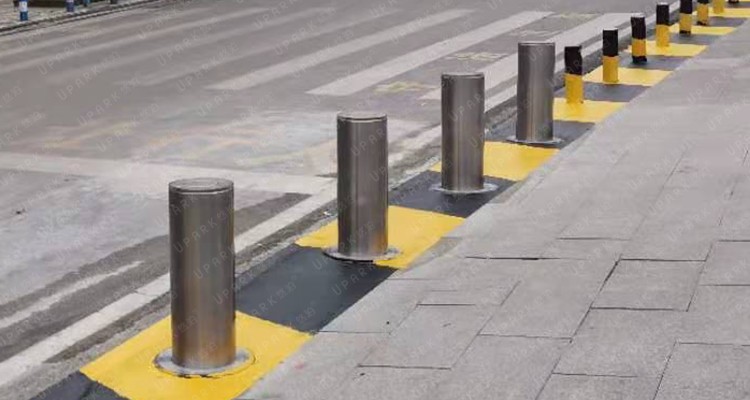
The school entrance and drop-off lane is where most schools face their biggest vulnerability. Hundreds of children pass through this area every morning and afternoon. Cars, SUVs, and vans line up bumper to bumper. The curb is inches from where kids walk.
Fixed stainless steel bollards placed along the curb create a physical barrier that prevents a vehicle from reaching the sidewalk, even if the driver loses control or panics. These bollards should be spaced to block passenger vehicles but allow pedestrian traffic to flow through. A typical spacing of 1.2 to 1.5 meters between bollard centers does the job without making the area feel like a prison.
Many schools also install automatic bollards at the entrance to the drop-off lane itself. During designated hours, the bollards rise to prevent through-traffic from using the lane as a shortcut. Outside of school hours, they lower to allow legitimate access. This keeps cars moving in the right direction without requiring a guard to manually direct traffic.
Protecting Building Entrances
Main building entrances face a different problem. Schools have multiple doors—front offices, gymnasiums, cafeteria, and classroom wings. Each one is a potential point of vehicle access, and locking all but one is not practical when hundreds of students move in and out throughout the day.
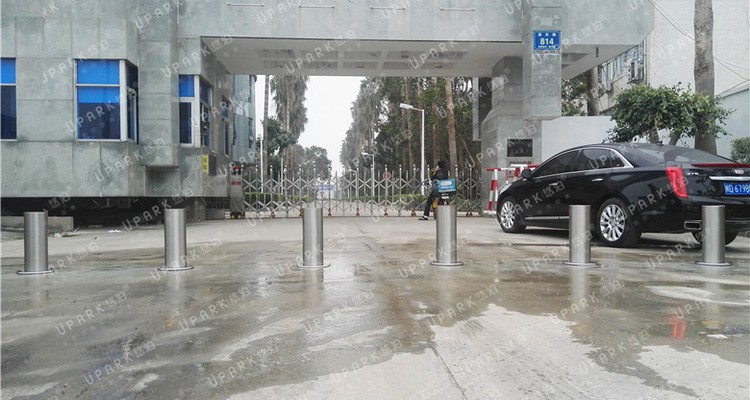
Retractable bollards solve this problem. At the main entrance, automatic or removable bollards control vehicle access while the door itself handles pedestrian traffic. When the school day starts, the bollards rise to block cars from driving up to the entrance. Emergency vehicles can be let through with a key switch or remote control. Deliveries are scheduled for specific windows when the bollards are lowered.
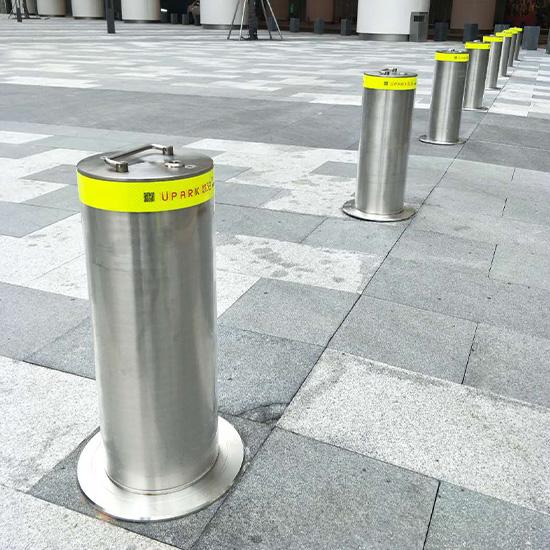
For doors where this is overkill, fixed bollards in a decorative style provide visual deterrence and physical protection without impeding the flow of foot traffic. Modern bollard designs come in styles that blend with school architecture—polished stainless steel, powder-coated steel in school colors, or even bollards with custom decorative sleeves.
Perimeter Security and After-Hours Protection
Once school is out, the threat profile changes. The campus is mostly empty, but now you have to worry about unauthorized vehicles entering, vandalism, and theft. Many schools leave their bollard systems in the raised position after hours, with only emergency and maintenance access allowed through.
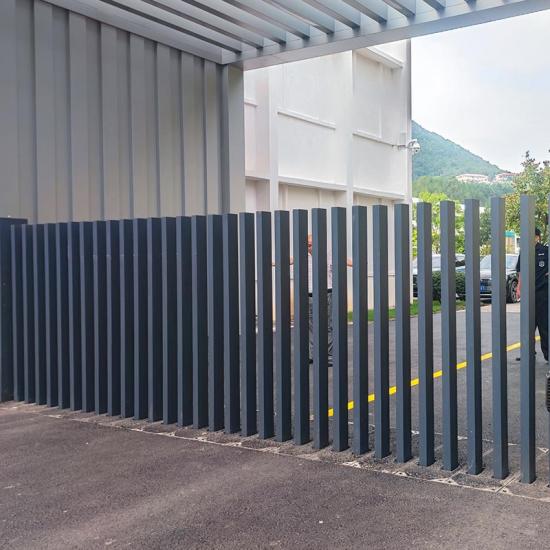
Some schools pair their bollards with fixed bollards and automated fencing gates to create a layered perimeter. The fence keeps pedestrians out, the bollards keep vehicles out, and the gate handles authorized access. This combination is much harder to defeat than any single measure alone.
For schools evaluating their security needs, the investment in bollards is modest compared to the potential liability. A vehicle incursion during school hours can result in injuries, lawsuits, negative publicity, and investigations that cost far more than the bollard installation. Getting ahead of the problem with physical barriers is simply good risk management.
call us :
+86 18206096507 e-mail : [email protected]




 ipv6 network supported