The Unique Security Environment at Prisons
Prisons operate in an environment where the threat model is fundamentally different from any other type of facility. The people inside have already demonstrated disregard for the law. The staff who work there face daily interactions with individuals who have every incentive to exploit security weaknesses. And the consequences of a security breach can include violent escapes, hostage situations, and serious harm to staff and civilians.
Vehicle security at prisons is not primarily about stopping external attackers. It is about controlling every vehicle that enters, exits, or moves within the facility grounds. Delivery trucks, staff vehicles, inmate transport vans, and maintenance equipment all need to be managed. A vehicle used as a weapon by an insider—whether a corrupt staff member or a desperate inmate—can do enormous damage in minutes.
Bollards play a specific role in this layered security approach. They create permanent barriers that cannot be bypassed by cutting power, spoofing credentials, or forcing a gate. They work 24/7 without human intervention, and they are designed to stop vehicles at speeds that no other physical measure can match.
Perimeter Defense and Vehicle Exclusion Zones
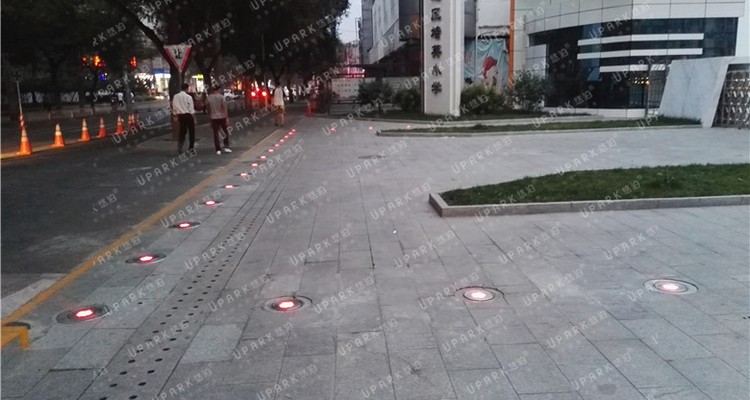
The prison perimeter is the first and most important line of defense. Modern correctional facilities use multiple barriers: walls or fences at the outer perimeter, a cleared vehicle exclusion zone, and then the actual prison building or housing unit walls. Bollards are installed within this vehicle exclusion zone to prevent a vehicle from reaching the inner perimeter fence or wall.
For this application, the bollard specification depends on the threat assessment. Most prison standards require bollards rated to stop a heavy vehicle at highway speeds. IWA 14-1 M50 or ASTM F2656 M50 ratings—capable of stopping a 15,000 kg truck at 80 km/h—are common specifications for correctional facility perimeters.
The fixed bollard installation at a prison must be engineered to withstand not just the impact test but also the repeated stress of an actual collision. In a real-world scenario, a vehicle may hit the bollard line at an angle, with a portion of its mass penetrating before the bollard engages. The foundation and surrounding structure must be designed to handle these dynamic loads.
Sally Ports and Vehicle Inspection Zones
Every vehicle entry to a prison passes through a sally port: a chamber with two gates that never open simultaneously. The vehicle enters through the outer gate, which closes behind it, and then the inner gate opens to allow the vehicle through. This prevents a scenario where an unauthorized vehicle breaches the outer gate and drives directly into the facility.

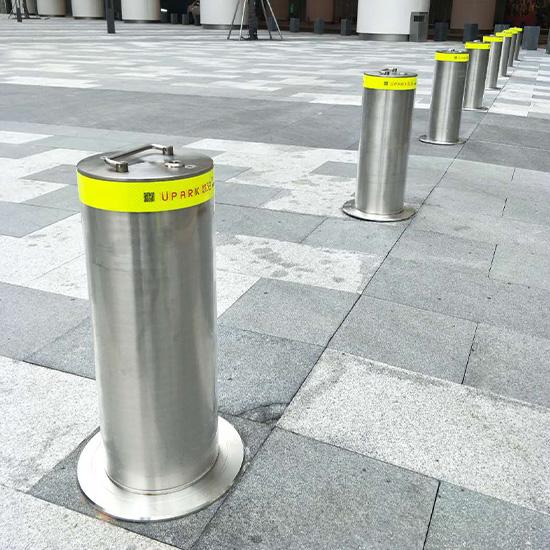
Within the sally port, bollards control the vehicle path. Fixed bollards at the chamber entrance prevent a vehicle from backing into or ramming the outer gate. Automatic bollards at the exit of the sally port ensure that even if a cleared vehicle behaves unexpectedly, it cannot proceed into the facility until the bollards are raised.
Prison vehicle inspection areas—where delivery trucks and transport vehicles are searched—also benefit from bollard placement. Fixed bollards create a defined inspection lane that prevents vehicles from bypassing the inspection process or accelerating through the checkpoint.
Internal Security and High-Value Targets
Inside the prison perimeter, additional bollard installations protect high-value targets: control rooms, armories, administrative buildings, and staff facilities. These locations are where a breach would cause the most damage, and they warrant additional physical protection beyond the perimeter.
A control room that monitors all cameras and access systems is a critical asset. Bollards around this building prevent a vehicle from crashing through the walls or ram-raiding the entrance. An armory containing weapons and security equipment needs the same level of protection. Automatic bollards at the entrance to these facilities allow staff vehicles to pass during authorized access periods while maintaining a barrier the rest of the time.
Correctional facility security is governed by strict regulations and audit requirements. The physical barrier specifications must be documented, installed correctly, and regularly inspected. Any deviation from the specification—a damaged bollard, a failed drive system, or inadequate foundation depth—becomes a finding in the next audit. For prison administrators, using certified, tested bollard systems from reputable manufacturers is not optional. It is the only way to meet the documentation and compliance requirements that govern high-security facilities.
call us :
+86 18206096507 e-mail : [email protected]




 ipv6 network supported