The material you pick for bollards determines how they look in year five and whether they still do their job in year ten. Get this wrong and you will be repainting, replacing, or explaining rust stains on your client's nice new plaza. The two main choices are stainless steel and carbon steel, with carbon steel sometimes called mild steel. Each has its place, but the differences in real-world performance are bigger than most specifiers expect.
Carbon steel bollards are cheaper upfront. A carbon steel post can cost 30 to 50 percent less than an equivalent stainless steel unit. That price gap is the main reason carbon steel remains common in projects where the budget is tight. Paint it, powder coat it, put it in the ground, and it looks fine on day one.
The problem starts a year or two later. Carbon steel rusts. Even with a good powder coat, any scratch, chip, or scrape at the base exposes bare steel to moisture and salt. In coastal areas, road salt regions, or anywhere with regular rain, that scratch turns into a rust spot within months. From there it spreads under the coating, and you get the familiar bubbling and flaking. Maintenance crews end up sanding, priming, and repainting every two to three years just to keep the things presentable.
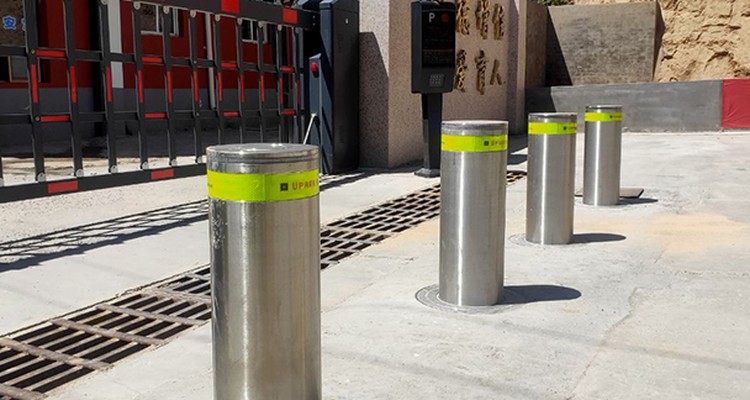
Inground bollards face a tougher environment. The portion below ground sits in a concrete pit where water collects. Even with a drainage system, moisture and soil chemicals attack the housing. Carbon steel housings corrode from the outside in, and since nobody sees it happening, the first sign of trouble is often when the bollard gets stuck or fails to rise.
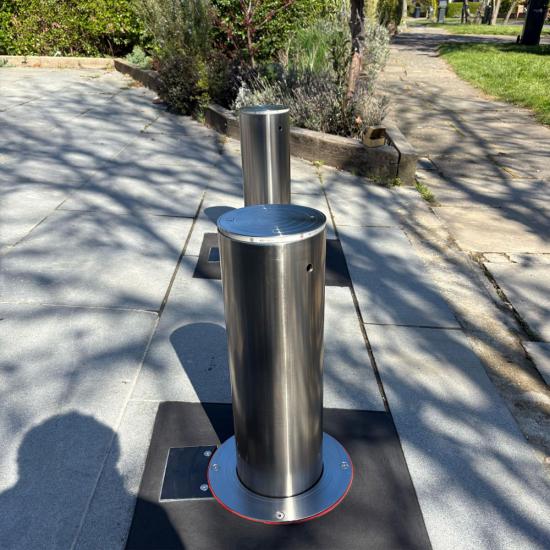
Stainless steel handles all of this differently. Grades 304 and 316 contain chromium that forms a passive oxide layer on the surface. This layer self-repairs when scratched. A 304 stainless bollard exposed to rain, road salt, and general urban grime will show some surface discoloration over time but will not rust through. A 316 grade adds molybdenum for extra resistance to chlorides, making it the better pick for coastal and marine environments.
UPARK uses 304 stainless steel as standard on its automatic bollards and fixed bollards. The surface gets sandblasted and finished with automotive-grade paint for color, but the underlying steel does not depend on that paint for protection. If the paint chips, the steel underneath still resists corrosion. For projects near saltwater, UPARK offers 316 stainless as an upgrade.

Wall thickness matters too regardless of material. UPARK standard bollards use 6mm wall thickness on a 219mm diameter post. Thinner walls, like 3mm or 4mm, are common on budget products. A 3mm carbon steel post in a parking garage will dent from a shopping cart. A 3mm stainless post will dent too, though at least it will not rust afterward.
Lifecycle cost tells the real story. Over a ten-year period, a carbon steel bollard with repainting every two or three years ends up costing as much or more than a stainless unit that needed nothing beyond an occasional wash. Add the labor cost of sending a crew to sand and repaint, and the gap gets wider. For facilities managers who track total cost of ownership, stainless steel wins on price too, not just durability.
Aluminum is a third option worth mentioning. It is lightweight and corrosion-resistant, but it lacks the impact strength of steel. An aluminum bollard will stop a slow-moving car. It will not stop a determined attacker in a truck. For high-security applications, steel in either stainless or carbon form is the only serious choice.
Pick carbon steel when the budget is the only constraint, the site is dry and inland, and the expected lifespan is five to seven years. Pick stainless steel for anything that needs to last ten years or more, especially in wet, salty, or corrosive environments. In practice, most specifiers who have dealt with rust complaints from a previous project go straight to stainless on the next one.
call us :
+86 18206096507 e-mail : [email protected]




 ipv6 network supported