When specifiers sit down to choose automatic bollards for a project, the first real decision is the drive system. Hydraulic has been the default for years. Walk onto any government compound or embassy perimeter and you will likely find hydraulic units in the ground. But electric bollards have been closing the gap fast, and for many projects they now make more practical sense.
Hydraulic bollards use a pump to push fluid through cylinders, raising and lowering the post. The force is impressive. A hydraulic unit can lift heavy posts quickly, and the system handles continuous use in high-traffic applications. Military bases, nuclear facilities, and critical infrastructure sites have relied on this technology for decades.
The catch is what happens after installation. Hydraulic systems need oil, hoses, and seals. Oil degrades over time. Seals leak. Hoses crack in cold weather. In places like northern Europe or Canada, hydraulic oil thickens below minus ten degrees Celsius, and the bollard either slows down or stops working until a heater kicks in. A frozen hydraulic bollard at 6 AM during a security shift change is not a theoretical problem.

Maintenance is the other issue. A hydraulic system needs periodic oil changes, usually every one to two years depending on use. A technician has to check fluid levels, inspect connections, and replace filters. If a seal fails, oil can leak into the foundation pit and contaminate the drainage layer. Fixing that means pulling the bollard out of the ground, replacing the seal, cleaning the pit, and refilling the system. That is a half-day job for two people at minimum.
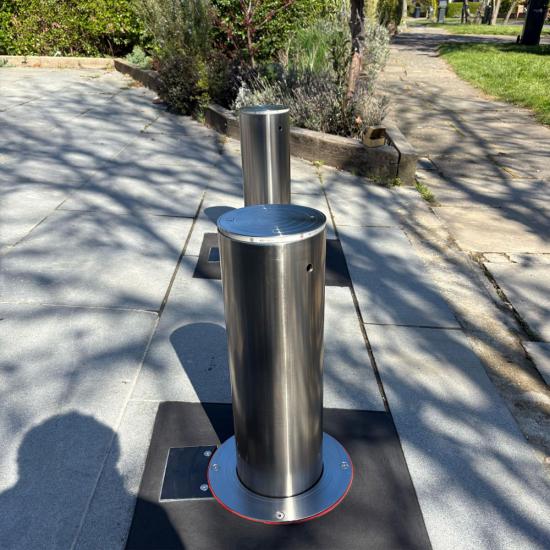
Electric, or more precisely electromechanical, bollards skip all of that. An electric motor inside the housing turns a lead screw or gear mechanism that raises and lowers the post. There is no oil, no hoses, and no external pump. The entire drive system is contained within the bollard itself. UPARK electromechanical bollards run on DC 36V, which is a safe extra-low voltage. This means any qualified electrician can handle the wiring. You do not need a specialist hydraulic contractor for installation or for ongoing service.
Power consumption tells part of the story too. A typical hydraulic pump unit draws between 1.5 kW and 3 kW during operation. An electromechanical bollard like the UP-A001 draws 400W. Over a year of daily use, that difference adds up. For sites running on backup power or solar, the lower draw of electric bollards matters.

Rising speed is comparable. UPARK electric bollards rise in about 5 seconds and lower in 3 seconds. Hydraulic units are in the same range, 3 to 6 seconds depending on the model and oil temperature. There is no meaningful speed advantage for hydraulic systems in standard commercial applications.
So when does hydraulic still make sense? Very high-security sites that need certified crash ratings above 7,500 kg at 80 km/h sometimes still specify hydraulic because the longer stroke and higher force allow for larger, heavier posts. If your project requires PAS 68 or DOS K12 certification on the highest threat level, talk to the manufacturer about whether a hydraulic unit is needed. For everything else, including IWA 14-1 level impacts up to 579 kJ, electric bollards handle the job.
The bottom line is straightforward. If you need extreme anti-ram capability at the highest certification level, hydraulic is still worth considering. For commercial properties, campuses, shopping centers, residential complexes, and most government buildings, electric bollards are simpler to install, cheaper to maintain, and more reliable over the long run. No oil changes, no hose failures, no winter freeze-ups. Just power, signal, and a motor that does its job.
If you want to discuss which drive system fits your specific site requirements, contact UPARK for a project consultation.
call us :
+86 18206096507 e-mail : [email protected]




 ipv6 network supported