Keywords: vehicle anti-theft devices, best car security 2026, GPS tracker vs bollard, steering wheel lock, car immobilizer, automatic bollards, UPARK bollards, car theft prevention comparison

Walk into any auto parts store or scroll through Amazon's car security section and you will find dozens of products that promise to protect your vehicle from theft. Steering wheel locks. GPS trackers. Kill switches. Faraday pouches. Alarm systems. Each one has a marketing claim. Each one costs somewhere between twenty and five hundred dollars. And each one, on its own, has a specific weakness that organized thieves know how to exploit.
The question is not "does this device work." A steering wheel lock does prevent the steering wheel from turning. A GPS tracker does report the vehicle's location. A Faraday pouch does block radio signals. The question is "does this device work against the specific theft methods being used in 2026." And the answer, for most devices sold to consumers, is "only sometimes, and only against the less sophisticated criminals."
This article is a field-level comparison of every major vehicle anti-theft device category, evaluated against the three most common theft methods in 2026: electronic compromise, physical entry, and flatbed extraction. The goal is not to tell you which device to buy. It is to show you which layers you are missing.
Automatic bollards will come up repeatedly in this comparison, not because they are a magic solution but because they address the one vulnerability that almost every other device ignores: what happens after the thief is inside the vehicle.
The three theft methods you are defending against
Before evaluating individual devices, you need to understand what you are up against. Vehicle theft in 2026 falls into three categories.
Method one: electronic compromise. This includes relay attacks (amplifying the signal from a key fob inside a house to unlock and start a vehicle parked outside), OBD port hacking (plugging a device into the diagnostic port to program a blank key), and signal jamming (blocking the lock signal from a remote so the vehicle remains unlocked). Electronic compromise is fast, quiet, and leaves no physical damage. It accounts for an estimated sixty percent of vehicle thefts in London and a growing share across all major markets.
Method two: physical entry and hotwiring. The old-school approach. Break a window, force a door lock, or, increasingly, enter a home to steal the keys directly (the 2-in-1 burglary method). Once inside the vehicle, the thief uses a screwdriver, a shaved key, or a bypass tool to start the ignition. This method is noisier and riskier than electronic compromise but requires no specialized electronic equipment beyond what is available at any hardware store.
Method three: flatbed extraction. A flatbed truck with a winch pulls up next to the target vehicle. The thief loads the vehicle onto the flatbed without ever entering it. No keys needed. No engine start needed. No alarm triggered. The entire operation looks like a legitimate repossession and takes under three minutes. This method is used primarily for high-value targets, including luxury cars, construction equipment, motorcycles, and vehicles with sophisticated electronic security that makes methods one and two impractical.
Device category one: signal-blocking products
What they are: Faraday pouches, boxes, and bags that block radio signals from key fobs.
Cost: Ten to fifty dollars.
What they do: Prevent relay attacks by containing the key fob's signal so that a relay amplifier outside the house cannot detect and relay it.
What they do not do: Protect against any other theft method. A Faraday pouch does nothing if the thief breaks into your house and takes the key out of the pouch. It does nothing if the thief loads the vehicle onto a flatbed. It does nothing if the thief jams your lock signal in a parking lot.
Verdict: Useful as a single layer in a multi-layer strategy. Worth the fifteen dollars. Not sufficient on its own. A Faraday pouch is like locking your front door: necessary but not a substitute for an alarm system, a fence, or a dog.
Device category two: steering wheel locks and pedal locks
What they are: Physical bars that lock onto the steering wheel, brake pedal, or clutch pedal to prevent the vehicle from being driven.
Cost: Twenty to eighty dollars.
What they do: Make the vehicle undrivable without removing the lock, which requires either a key or heavy cutting tools.
What they do not do: Stop a flatbed extraction. A steering wheel lock prevents the vehicle from being steered; it does not prevent the vehicle from being rolled onto a truck. They can also be defeated with a hacksaw or bolt cutter in under a minute, and thieves who target vehicles with visible steering wheel locks come prepared with cutting tools.
Verdict: The best value in the under-one-hundred-dollar category. A visible steering wheel lock is a strong deterrent against opportunistic thieves. It is useless against organized theft rings with power tools and flatbed trucks. Think of it as a bike lock for your car: it stops the casual thief and slows down the professional by seconds, not minutes.
Device category three: GPS trackers
What they are: Concealed GPS devices that report the vehicle's real-time location to a mobile app or monitoring service.
Cost: Fifty to three hundred dollars, plus monthly subscription fees of ten to thirty dollars.
What they do: Enable recovery of a stolen vehicle by providing its location to law enforcement. Some advanced trackers include geofencing alerts, movement notifications, and backup batteries that continue transmitting after the vehicle battery is disconnected.
What they do not do: Prevent theft. A GPS tracker tells you where your car is after it has been stolen. It does not stop anyone from stealing it in the first place. In some cases, the tracker's signal can be jammed with a cheap GPS jammer, and professional thieves often park stolen vehicles in underground garages or shipping containers specifically to block tracking signals before they are discovered.
Verdict: Essential for recovery, useless for prevention. Every vehicle should have a GPS tracker, but it should be the last line of defense, not the only one. A tracker is the equivalent of "find my phone" for your car: you are glad to have it when you need it, but it does not replace a lock screen passcode.
Device category four: engine immobilizers and kill switches
What they are: Electronic devices that prevent the engine from starting without a specific action, such as entering a code, pressing a hidden button, or presenting an RFID tag.
Cost: One hundred to five hundred dollars for professional installation.
What they do: Prevent hotwiring and key cloning by interrupting the starter circuit, fuel pump, or ignition system. Even with a correctly programmed key, the engine will not start unless the immobilizer is disarmed.
What they do not do: Stop a flatbed extraction. If the thief does not need to start the engine because the vehicle is being loaded onto a truck, an immobilizer is irrelevant. They also do not prevent the physical damage caused by an attempted theft — a thief who breaks in and tries to start the engine will still leave you with a broken window and a damaged ignition, even if they fail to drive away.
Verdict: The best electronic defense available. A professionally installed, hidden kill switch is the single most effective electronic measure against methods one and two. Combined with a GPS tracker, it provides strong post-entry protection. It does not address the perimeter vulnerability, which is why it needs to be paired with a physical barrier.
Device category five: alarm systems
What they are: Factory-installed or aftermarket alarm systems that trigger a siren when a door, window, or trunk is opened without disarming the system, or when the vehicle is tilted or moved.
Cost: Fifty to three hundred dollars for aftermarket systems. Factory alarms are included with most modern vehicles.
What they do: Create noise to alert the owner and deter the thief. Some advanced systems send alerts to a mobile phone and include two-way communication so the owner can remotely disable the vehicle.
What they do not do: Stop a determined thief. Car alarms are so common that most people ignore them. A thief working quickly can complete a theft before anyone investigates the noise. Flatbed extractions often do not trigger alarms at all, because the vehicle is rolled gently rather than broken into.
Verdict: Marginally useful as a deterrent. Factory alarms are essentially free and better than nothing. Aftermarket alarms add little value beyond what a factory system already provides. Do not spend money on an alarm before you have spent money on an immobilizer and physical security.
Device category six: vehicle tracking and recovery services
What they are: Subscription services like LoJack, OnStar, or third-party equivalents that combine GPS tracking with a monitoring center that coordinates with law enforcement for recovery.
Cost: Three hundred to one thousand dollars for hardware and installation, plus annual subscription fees.
What they do: Provide professional-grade tracking with a higher recovery rate than consumer GPS devices, largely because the monitoring service actively coordinates with police rather than leaving the owner to handle it alone.
What they do not do: Prevent theft. These are recovery services, not prevention services. The vehicle still gets stolen. The recovery rate is higher, but the theft still happens, the damage still occurs, and the insurance claim still needs to be filed.
Verdict: A worthwhile investment for vehicles valued above fifty thousand dollars. The recovery rate advantage over consumer GPS is real. For vehicles worth less than that, a consumer GPS tracker provides similar functionality at a lower ongoing cost.
Device category seven: physical perimeter barriers
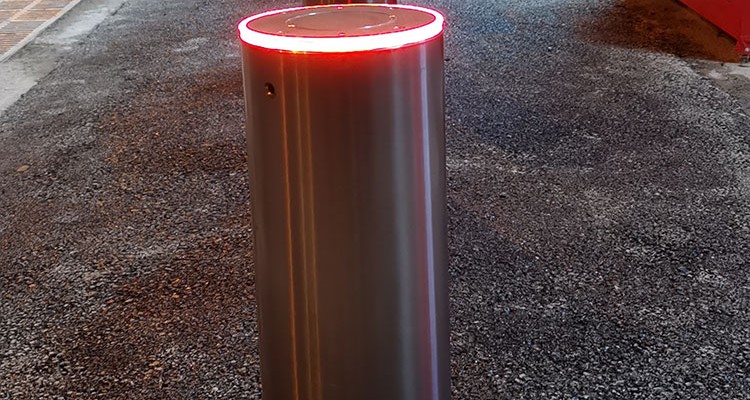
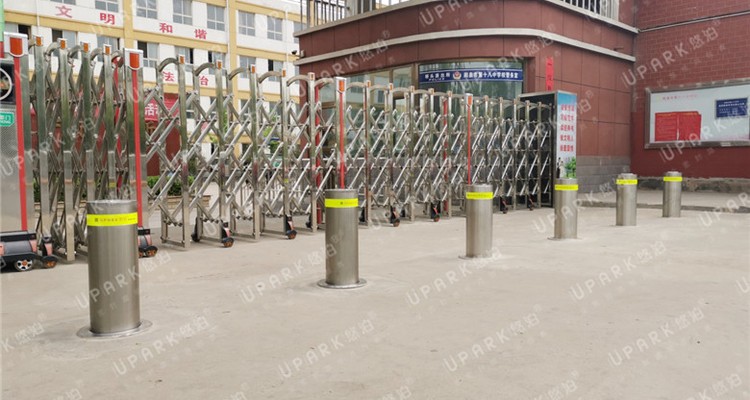
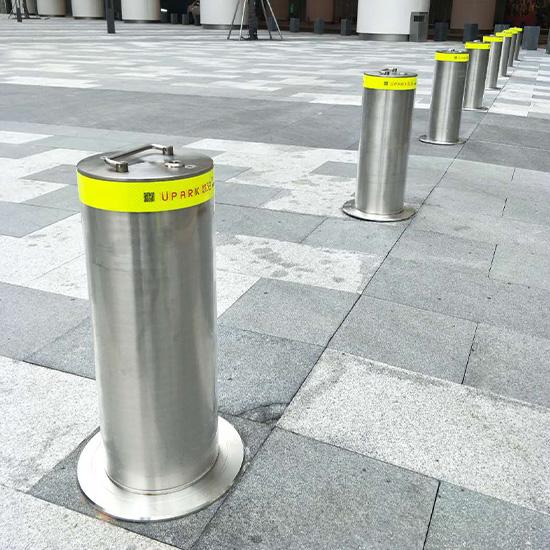
What they are: Automatic bollards, lockable posts, security gates, and other physical barriers installed at the entrance to a driveway, parking space, or commercial lot.
Cost: Five hundred to five thousand dollars for residential installations, depending on the number of bollards and the complexity of the installation. Commercial installations with multiple access points and crash-rated barriers run higher.
What they do: Physically prevent a vehicle from being driven off the property. Unlike every other category on this list, physical barriers do not rely on electronics, do not need to be activated per use, and cannot be bypassed with a signal relay, a screwdriver, a jammer, or a laptop. They create a steel barrier between the vehicle and the exit.
What they do not do: Protect vehicles parked on public streets or in public car parks. A bollard at your driveway protects the vehicle when it is at home. It does not protect it at the supermarket. For that, you still need the other layers.
Verdict: The only category on this list that prevents all three theft methods when the vehicle is at its primary parking location. A bollard stops electronic compromise (thief cannot drive away), physical entry (thief cannot drive away), and flatbed extraction (truck cannot reach the vehicle if the bollard is positioned correctly). This is the category that most vehicle security discussions ignore, and it is the category that addresses the vulnerability that every other device leaves open.
The comparison matrix
Here is how each category performs against the three theft methods.
| Device | Electronic Compromise | Physical Entry | Flatbed Extraction |
|--------|----------------------|----------------|-------------------|
| Faraday pouch | ✅ Blocks relay | ❌ Does nothing | ❌ Does nothing |
| Steering wheel lock | ✅ Deters casual | ⚠️ Slows by seconds | ❌ Does nothing |
| GPS tracker | ❌ No prevention | ❌ No prevention | ❌ No prevention |
| Kill switch | ✅ Prevents start | ✅ Prevents start | ❌ Does nothing |
| Car alarm | ⚠️ Noise only | ⚠️ Noise only | ❌ Often not triggered |
| Recovery service | ❌ No prevention | ❌ No prevention | ❌ No prevention |
| Automatic bollard | ✅ Stops vehicle | ✅ Stops vehicle | ✅ Blocks access |
The pattern is clear. Electronic devices stop electronic attacks and, in the case of immobilizers, physical hotwiring. Recovery devices help after the theft. Only physical barriers stop the vehicle from moving regardless of how the thief gained access. The bollard does not care whether the key was cloned, stolen, or bypassed. It does not care whether the thief used a laptop, a crowbar, or a flatbed truck. It just stops the vehicle.
Why layering matters more than any single device
The comparison above might suggest that a bollard is the only device worth buying. That would be the wrong conclusion. The right conclusion is that each category addresses a different vulnerability, and the goal is to have no uncovered vulnerabilities.
A thief approaching a vehicle secured only by a bollard can still break in, damage the interior, and steal valuables from inside. A thief approaching a vehicle secured only by a Faraday pouch can still drive it away if they break into the house and take the key. A thief approaching a vehicle with a kill switch and GPS tracker can still load it onto a flatbed.
The optimal setup combines three layers:
Layer one: perimeter. An automatic bollard at the driveway entrance. This prevents the vehicle from being driven or towed off the property. It is the only layer that addresses flatbed extraction.
Layer two: immobilization. A hidden kill switch or aftermarket immobilizer. This prevents the engine from being started even if a thief bypasses the perimeter or accesses the vehicle in a public place. It addresses electronic compromise and physical hotwiring.
Layer three: tracking. A concealed GPS tracker with a backup battery. This enables recovery if the first two layers fail. It does not prevent the theft, but it dramatically increases the probability of getting the vehicle back before it is stripped or shipped overseas.
A vehicle with all three layers is not unstealable. Nothing is unstealable. But it is unattractive enough — the risk is high enough, the time required is long enough, the noise generated is loud enough — that all but the most determined thieves will move on to an easier target. And that, in the end, is what vehicle security is about: not being impenetrable, just being harder to steal than the car down the street.
Features that separate good bollards from bad ones
If you are adding a physical barrier to your security setup, do not buy the cheapest option on a marketplace website. Here is what separates a security investment from a security compromise.
Voltage safety. Mains-voltage bollards (110V or 220V) require professional electrical installation and carry an electrocution risk in wet outdoor conditions. Low-voltage DC systems, like UPARK's 36-volt platform, are intrinsically safe, easier to install, and consume less standby power. For a device that is powered twenty-four hours a day, the standby power difference alone can pay for the cost difference between a cheap high-voltage unit and a properly engineered low-voltage one within a few years.
Waterproofing. IP67 certification means the bollard is fully sealed against dust and water ingress, including temporary immersion. A no-drainage design means the foundation does not need a drainage system, which eliminates the most common failure point in outdoor bollard installations. Drainage pipes clog, freeze, and fill with debris. A bollard that does not have them lasts longer and costs less to maintain.
Cycle speed and noise. A bollard at your driveway is something you interact with every day. An electromechanical drive system cycles in three to five seconds and operates quietly. A hydraulic system takes ten to fifteen seconds and produces noticeable pump noise. Over years of daily use, the difference in speed and noise is the difference between a security device that becomes part of your routine and one that becomes an annoyance you start leaving down "just this once."
Emergency operation. Every bollard should include a manual release that allows it to be lowered without electrical power. Power outages happen. If your bollard cannot be lowered manually, you are trapped — or locked out — until the power comes back. This is not a luxury feature. It is an operational requirement.
Crash rating. For residential use, a bollard rated to stop a 2.5-tonne passenger vehicle at moderate speed is sufficient. For commercial use, look for PAS 68 or ASTM F3016 certification that matches the weight and speed of the heaviest vehicle that could approach the bollard. A delivery depot that handles seven-tonne trucks needs a different rating from a residential driveway.
The bottom line
The vehicle anti-theft market is full of products that do something useful. Faraday pouches block signals. Steering wheel locks immobilize steering. GPS trackers report location. Kill switches prevent engine starts. Alarms make noise.
What almost none of them do is stop a vehicle from being physically moved. That gap — the gap between "the engine will not start" and "the vehicle cannot leave" — is where the most expensive thefts happen. A vehicle that cannot be driven can still be towed. A vehicle that cannot be hotwired can still be loaded onto a flatbed. A vehicle with three GPS trackers and a subscription recovery service can still be inside a shipping container and halfway to a foreign port before the tracking signal is discovered and acted upon.
Automatic bollards close that gap. They are not the cheapest category on this list, and they are not the simplest to install. But they are the only category that addresses the perimeter vulnerability that every other device assumes does not exist. In a security environment where thieves are more sophisticated and more aggressive than at any point in the past decade, that perimeter vulnerability is not a theoretical concern. It is the primary attack vector.
Layer your security. Start with the physical barrier. Add the electronic immobilizer. Finish with the tracker. Each layer has a job. Together, they make your vehicle a problem that most thieves will choose not to solve.
Learn more about UPARK automatic bollards and build a vehicle security system that actually covers all the gaps.
call us :
+86 18206096507 e-mail : [email protected]




 ipv6 network supported