When teams specify bollards for a site, safety usually means impact rating and intercept height. There is a quieter risk most specifiers overlook: the drive voltage. Traditional heavy-duty automatic bollards run on 380V three-phase power. UPARK uses a 36V low-voltage electromechanical drive. The difference shows up on every install day and on every maintenance call, and it is the kind of detail that decides whether a project stays on schedule.
The shock risk is real and permanent
A 380V system needs a licensed electrician, buried conduit rated for high voltage, and strict separation from any drainage route. Bollards live outdoors, in rain, next to surface water. That combination never stops being a hazard. A 36V system is touch-safe. Your installer works faster, and your facilities team can service it without calling in a high-voltage contractor.
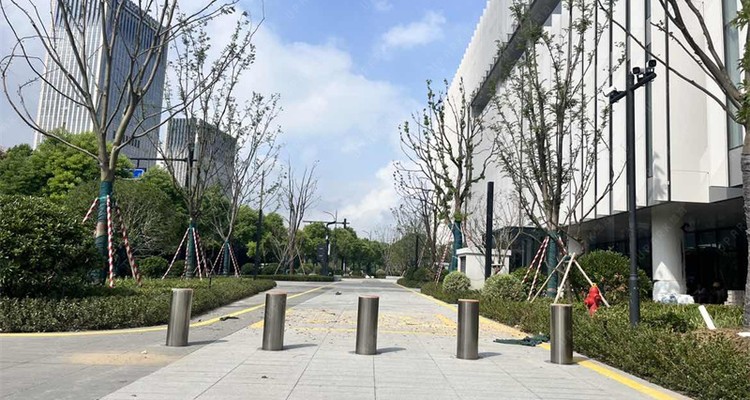
The wiring discipline is harder too. Every joint needs waterproof tape, every conduit needs the right rating, and more steps mean more chances for a field error that only surfaces in the first storm. Low voltage removes most of those steps entirely, which is why our field failure rate stays where it is.
Retrofit becomes possible
Older civic buildings, historic streets, and small municipal projects often have weak or outdated electrical supply. Pulling a new 380V three-phase line is expensive, and sometimes impossible without a full upgrade. 36V runs off a standard low-voltage circuit, the same family as landscape lighting. We have watched bollards go into a 1960s town-hall forecourt where a three-phase upgrade had been quoted in five figures.
The same low-voltage approach has also unlocked sites that were previously ruled out. A coastal visitor center on a protected grid simply could not host a three-phase run. Moving to 36V changed the conversation from 'no' to 'when', and the install went in over a single weekend.
Safer where people actually walk
Bollards sit where pedestrians queue and children cross. Low voltage means a fault is a nuisance, not an emergency. Combined with an IP68 rating and a drainage-free foundation, the whole installation stays dry and safe through every season. There is no drainage pipe to fail and no high-voltage joint to worry about near a public footpath.
Control and integration stay standard
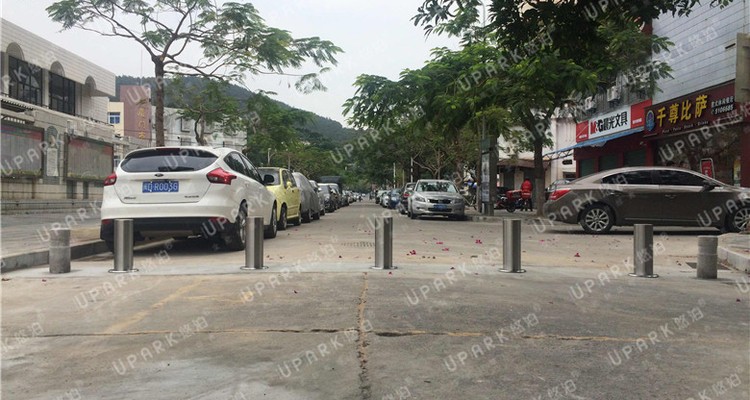
Choosing low voltage does not mean giving up on smart access. Our bollards still link to RFID readers, license plate recognition, traffic lights, and central management platforms through the same control logic as any other system. The only thing that changes is what sits in the trench.
Performance does not suffer
Some buyers assume low voltage equals weak. At this scale it does not. 36V electromechanical drives still deliver fast rise times and full intercept height, with the duty cycle needed for busy entrances. The trade-off people expect simply does not appear. Explore our Automatic Bollards to see the full specification, or read About Us for how we build for safety first.
call us :
+86 18206096507 e-mail : [email protected]




 ipv6 network supported