The price gap between bollards on the market is wider than most buyers expect. A unit priced at $180 and one at $420 can look almost identical in a product photo. They won't perform the same.
Here's what the cheaper one is usually hiding.
Thin wall construction is the most common shortcut. Standard bollard tubing should be 5–6mm wall thickness minimum for structural reliability. Budget versions regularly ship at 3–4mm. The unit passes a casual inspection. It won't pass a real impact.
Short overlap sections cause problems that don't appear until the bollard has been in service for a year or two. The overlap is the zone where the rising inner tube is guided and supported by the outer sleeve. A 10cm overlap versus a 20cm overlap feels identical during a slow-speed rise. During a lateral impact, the shorter one concentrates all the load at a single contact band. That edge wears fast, loosens, and eventually binds.
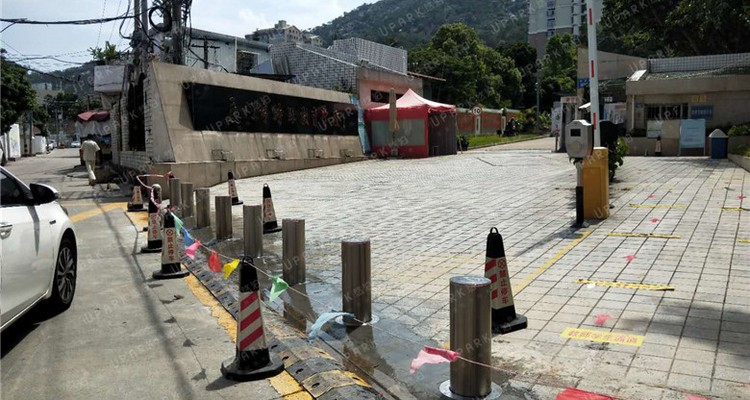
Weld quality is invisible until it fails. Many low-cost units use intermittent welds or skip full penetration at critical joints to save time. The failure mode is usually a crack that starts at a stress concentration and propagates. By the time it's visible, the structural integrity is already compromised.
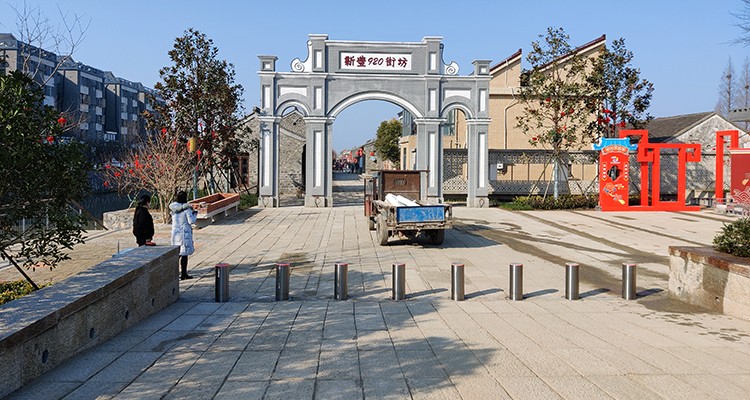
Surface treatment corners are cut in ways that aren't obvious. Hot-dip galvanizing costs more than spray zinc. A bollard that looks rust-resistant in year one can show significant corrosion by year three if the coating process was rushed or the steel wasn't properly cleaned before treatment.
Motor and seal tolerances matter more than spec sheets suggest. A motor rated for 10,000 cycles and a motor actually tested to 10,000 cycles are not the same thing. Budget bollards often carry cycle ratings that were calculated, not measured. IP ratings follow the same pattern — a declared IP67 without certified testing means little.
The overlap issue deserves more attention than it gets. UPARK's 20cm overlap specification is a deliberate engineering choice. During an impact event, the force isn't just vertical — there's a significant lateral component as a vehicle strikes and slides. More overlap means that lateral load is distributed across a longer contact surface. Less overlap means a lever effect that multiplies force at the contact edge.
None of this is apparent from a standard product listing. You have to ask specifically: what is the wall thickness, what is the overlap length, how were the IP and cycle ratings verified?
If a supplier quotes a low price and can't answer those questions, the price is telling you something.
Compare specifications directly at UPARK automatic bollards. Wall thickness, overlap length, and IP certification details are available on request.
call us :
+86 18206096507 e-mail : [email protected]




 ipv6 network supported