Why Electromechanical Bollards Outperform Hydraulic in Cold Climates
The Cold-Weather Bollard Problem
When outdoor temperatures fall below -15°C to -20°C, hydraulic bollard systems face a fundamental engineering challenge: hydraulic fluid viscosity increases dramatically in cold conditions. The same oil that flows freely at 20°C can become thick as molasses at -25°C, causing slow operation, increased motor load, seal hardening, and — in worst cases — complete system lock-up.
For facilities in Siberia, the Canadian prairies, Tibet, Scandinavia, or any high-altitude location where winter temperatures regularly reach -20°C or below, this is not a theoretical concern. It is a documented failure mode that compromises security exactly when the environment is most demanding.
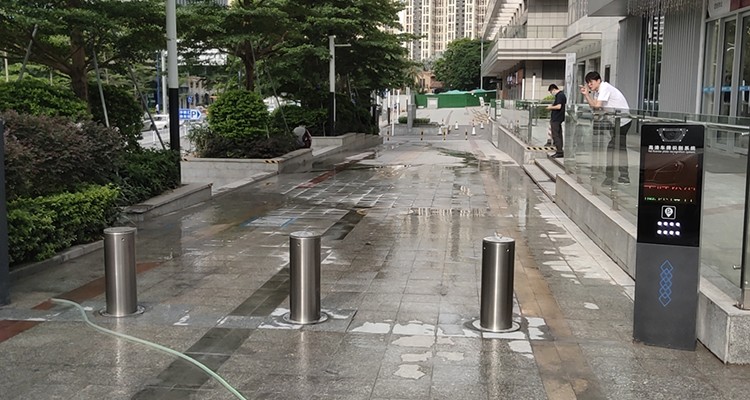
Electromechanical Systems: No Fluid, No Freeze
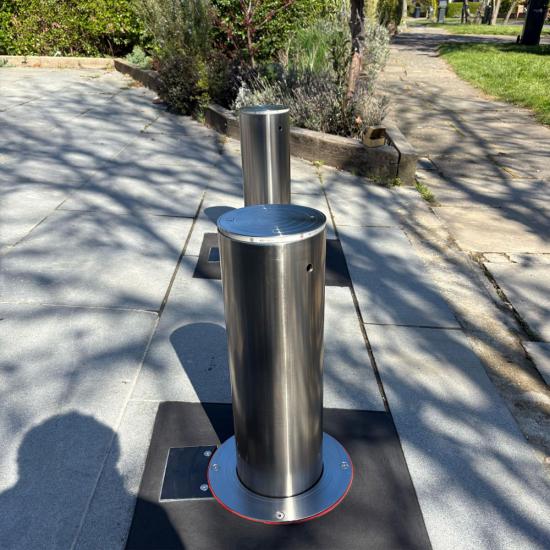
An electromechanical bollard has no hydraulic fluid circuit. The drive mechanism is a DC motor connected to a mechanical lead screw or rack-and-pinion system. At -30°C, the motor still turns, the screw still drives, and the bollard still rises. The only cold-weather consideration is bearing lubrication — and modern synthetic greases rated to -40°C address this entirely.
Electrical resistance in copper windings increases slightly at very low temperatures, but this has negligible effect on operating torque in a well-designed motor. By contrast, hydraulic fluid viscosity follows an exponential curve — doubling every 10-15°C of temperature drop.
The Practical Difference
A security manager at a mountain resort or a logistics hub in northern China should not have to choose between reliable vehicle access control and functional perimeter security during winter. An electromechanical bollard with IP67 sealing, a low-temperature-rated motor, and synthetic bearing lubrication operates the same at -30°C as it does at +40°C.
For cold-climate installations, the choice is straightforward: electromechanical bollards are not just preferred — they are the only defensible specification.
call us :
+86 18206096507 e-mail : [email protected]




 ipv6 network supported