Ask any contractor who has installed automatic rising bollards, and they will tell you the same story. The bollards themselves go in fine. It is the drainage that kills the schedule.
Traditional automatic bollards, especially hydraulic models, sit in a pit below ground level. That pit collects water. Rainwater gets in. Groundwater seeps in. Flooding happens. And if that water has nowhere to go, the mechanism rusts, the electronics short out, and the whole unit fails within months. So builders have no choice but to install a proper drainage system underneath every single bollard. That means digging deeper trenches, laying perforated pipes, connecting to storm drains or sump pumps, and backfilling with gravel. It is a lot of work for something the client never sees.
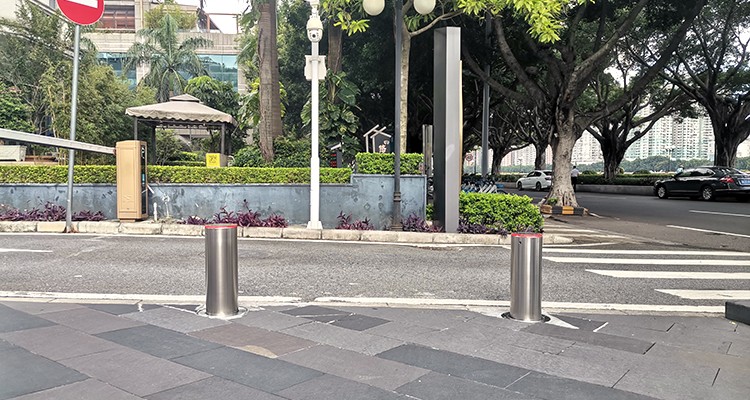
The problem runs deeper than just the physical labor. Drainage design requires coordination with civil engineers. You need permits for connecting to municipal storm systems in many jurisdictions. The weather has to cooperate, because you cannot pour concrete or lay pipe in standing water. One unexpected rainstorm can set the project back by days. And if something goes wrong with the drainage later, say a pipe blocks or a pump fails, fixing it means tearing up the finished surface around the bollard. That is an expensive and disruptive repair that nobody wants to deal with.
This is where sealed IP67 bollards take a completely different approach. Instead of trying to keep water out of a pit and draining what gets in, the design makes the entire bollard housing watertight. The unit sits in a standard concrete foundation, just like a fixed bollard would. There is no open cavity. There is no standing water. There is nothing to drain. The IP67 rating means the housing can withstand temporary submersion without letting water reach the internal mechanism. Some models even carry IP68 certification for prolonged immersion.
The practical impact on a project is significant. Without a drainage system to design, permit, and install, the foundation work becomes straightforward. Excavate, set the sleeve, pour concrete, drop in the bollard. The total depth of excavation stays around 800 to 1000mm for most models, compared to 1200 to 1500mm for traditional systems that need room for drainage layers. That shallow dig saves on excavation costs, reduces the volume of concrete needed, and cuts the time each bollard takes from preparation to operational status.
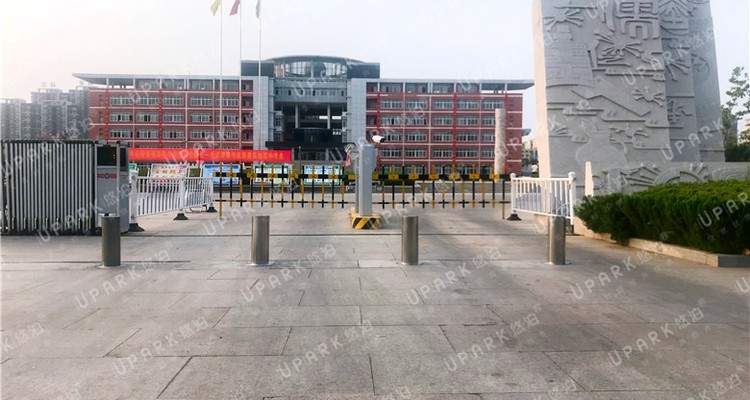
For projects installing a line of ten or more bollards, like a commercial driveway or a parking facility entrance, the savings compound quickly. For a detailed look at how these savings add up across the entire project, check out this bollard installation cost comparison. Each eliminated drainage connection is one fewer coordination point, one fewer potential failure point, and one fewer thing to maintain over the life of the installation. Over a ten year period, the reduction in maintenance alone can be substantial. There are no sump pumps to service, no pipes to clear, no French drains to inspect after heavy storms.
The sealed design also performs better in locations where drainage is genuinely difficult. Coastal sites with high water tables, underground parking structures where connecting to a storm system is impractical, and urban areas where the ground is already packed with utilities all present serious challenges for conventional drainage. A sealed automatic bollard sidesteps these issues entirely. If the site has power and can accommodate a concrete foundation, the bollard can go there.
Drainage has been an accepted cost of doing business with automatic bollards for decades, mostly because there was no alternative. Sealed electromechanical technology changes that equation. By making the bollard housing itself the waterproof barrier, it removes the single most complicated and expensive part of the installation process. For project managers watching their budget and schedule, that is not a small improvement. It is the difference between a project that finishes on time and one that drags on for weeks.
call us :
+86 18206096507 e-mail : [email protected]




 ipv6 network supported