The beach season does not really end in one day. July and August bring the peak, then the shoulder months carry festivals, weekends and mild-weather visitors right through autumn. For a coastal town or resort, that means the control you need in September is not the control you needed in July. Bollards let a street change its mind with the season, without building a wall.
The seasonal squeeze
Promenades, harbour squares and old-town cores share a problem: they are lovely to walk and impossible to close off with fixed barriers because traders, residents and emergency vehicles all need in. A permanent block kills the commerce; no control kills the experience. The answer is a barrier that opens and shuts on a plan rather than a poured foundation.
Keeping the promenade clear
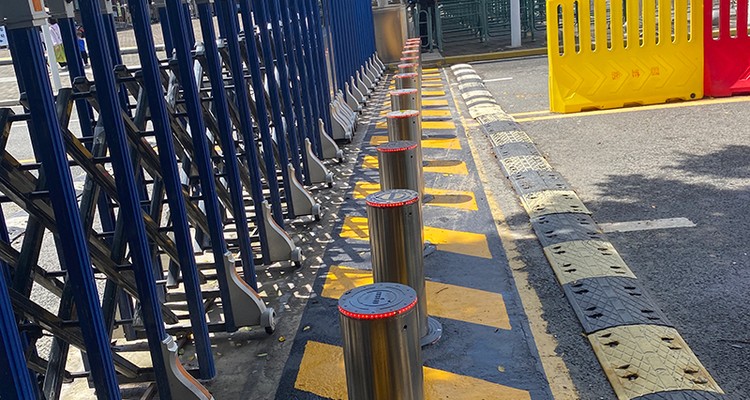
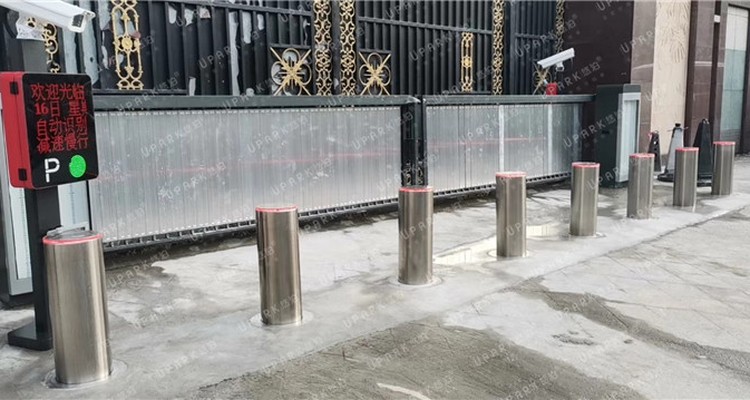
A run of fixed posts along the seafront walkway keeps cars off the pavement where families stroll, which is the single biggest win for a resort town. At the crossings and service openings, automatic bollards drop flat so a van or a boat trailer can pass, then rise again. Pedestrians get a continuous, car-free frontage; the few vehicles that belong there still get through. See the fixed bollards and automatic bollards pages.
Timed access for traders and residents
Most resorts run the same daily rhythm: deliveries before the crowds, pedestrians through the middle of the day, residents home in the evening. Automatic bollards on a timer open early for suppliers and close once foot traffic builds, with a card or fob for locals who live inside the zone. One small cabinet feeds a whole row of posts, so the town is not paying a warden to stand at each gate.
Protecting the historic core
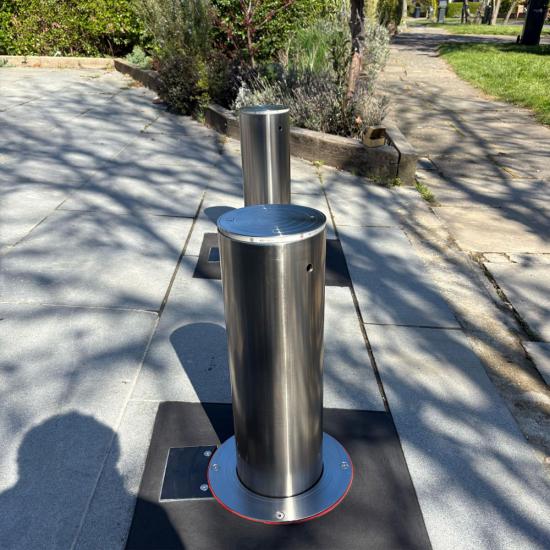
Narrow streets in old quarters leave no room for a swing gate or a rising arm. Bollards recess flush into the road and vanish when down, which suits tight, heritage settings where anything larger would look wrong. For the festival weekend, a few removable bollards lift out entirely so a parade or market can use the full width, then drop back in on Monday. The parking barrier range covers the larger car-park entrances on the edge of town.
Why electromechanical suits the coast
Salt air, frequent flooding and crowds standing close to the mechanism all point the same way: a sealed, low-voltage, IP68 unit with no drainage pit to clog. That is exactly the build UPARK uses, and it is why these posts hold up in harbours and beach towns where pumped-and-sumped systems rot out in a couple of seasons.
The bottom line
A resort lives or dies on how it feels to walk around. Bollards give a town a street that is a plaza in August and a serviced lane in November, switched by a timer instead of a construction crew. For a place that makes its money from people on foot, that flexibility is the whole game.
call us :
+86 18206096507 e-mail : [email protected]




 ipv6 network supported