Most people do not think about electrical wiring when they budget for bollard installation. They think about the bollards, the concrete, the excavation. Then the electrician shows up, looks at the site, and the quote comes in higher than expected. That surprise usually comes down to voltage.
Traditional hydraulic and pneumatic rising bollards operate on 220V or 380V power. In most countries, working with mains voltage requires a licensed electrician. Not just any electrician, but one certified for outdoor and underground installations. The wiring needs to be run through conduit, buried at the right depth, and protected from moisture and physical damage. Ground fault circuit interrupters are mandatory. Each connection point needs to be sealed against water ingress. The regulatory compliance alone adds time and paperwork to the project.
The licensed electrician requirement also creates scheduling problems. These are skilled tradespeople in high demand. You cannot always get one on site the day you need them. If the bollard installation crew finishes the groundwork on a Tuesday but the electrician cannot make it until Friday, the whole project sits idle for three days. On projects with tight timelines, that kind of delay has real financial consequences. Crews move on, mobilization costs add up, and client deadlines slip.
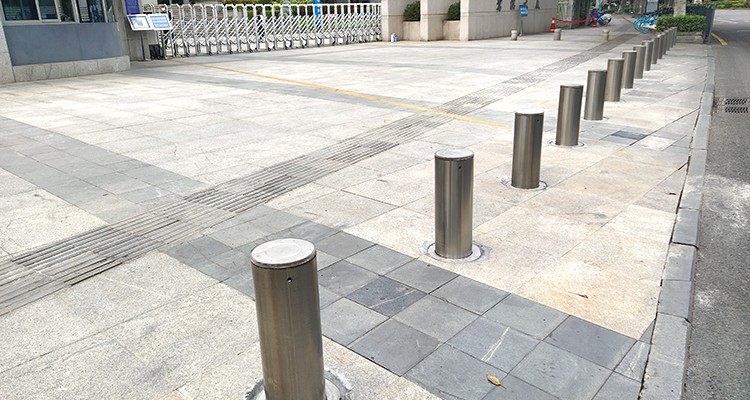
Low voltage 36V systems work differently. In most regulatory frameworks, 36V DC falls below the threshold that requires a licensed electrician. A general contractor or maintenance technician can handle the wiring. The connection is essentially plug and play. Run a low voltage cable from the power supply to each bollard, connect the terminals, and the system is live. No conduit is required in many jurisdictions. No ground fault protection is needed because the voltage is not dangerous to touch. The cables are thinner, lighter, and easier to route through congested underground spaces where large conduit runs would be impractical.
The safety difference matters beyond just regulatory compliance. A damaged 220V cable buried under a parking lot is a genuine electrocution hazard. A damaged 36V cable is not. For sites with heavy vehicle traffic, frequent ground vibration, or exposure to corrosive elements like road salt, that safety margin is worth having. Over the decades-long service life of a bollard installation, the underground wiring will face conditions that test its integrity. Low voltage gives you a much wider margin of safety when those conditions eventually take their toll.
From a cost perspective, the math is straightforward. A licensed electrician in most markets charges two to three times the hourly rate of a general contractor. If a project requires a full day of electrical work at 220V, switching to a 36V system might reduce that to two or three hours of work by a less specialized tradesperson. Multiply that across a row of multiple bollards, each needing its own cable run and connection, and the savings become significant. Some projects report electrical installation costs dropping by forty to sixty percent when switching from mains voltage to low voltage systems, as detailed in this full cost breakdown comparison.

There is also the equipment cost to consider. Conduit, junction boxes, GFCI breakers, and heavy gauge copper wire all cost money. Low voltage systems use simpler components. The power supply unit, typically a compact transformer or driver, is the only specialized electrical component needed. Everything downstream of that is basic low voltage cabling. For a ten bollard installation, the material savings on electrical components alone can run into hundreds of dollars.
The tradeoff that some people worry about is whether 36V provides enough power. For electromechanical bollards using efficient motor designs, the answer is yes. Modern 36V systems deliver reliable raise and lower cycles that meet the demands of most commercial and institutional applications. The motors are designed to deliver high torque at low voltage, and the power supply units provide the necessary current without straining. The days of low voltage meaning low performance are long gone.
For anyone planning a bollard project, the wiring decision affects the budget, the timeline, and the long term maintenance requirements. Low voltage systems remove a major bottleneck from the installation process and reduce the ongoing compliance burden. That is not just a cost saving. It is a project management advantage that makes the whole installation smoother from start to finish.
call us :
+86 18206096507 e-mail : [email protected]




 ipv6 network supported