What a Data Center Actually Protects
A data center is not just a building full of servers. It is the physical infrastructure that keeps the internet running, banks processing transactions, hospitals maintaining patient records, and governments operating. A breach that takes down a major data center for hours can cascade into problems across an entire region.
This is why data center operators invest heavily in cybersecurity. Firewalls, intrusion detection systems, encryption, and access controls protect the digital assets. But the physical layer is equally important. A vehicle that crashes into a data hall, takes out cooling units, or disrupts power distribution can cause just as much damage as a cyberattack.
The threat model for a data center differs from most other facilities. Physical attacks are rare but high-consequence. A disgruntled contractor with a truck, a protest group attempting to make a point, or even an accidental incursion by a delivery vehicle—any of these can disable critical systems if the physical infrastructure is not designed to withstand them.
Perimeter Security for Server Facilities
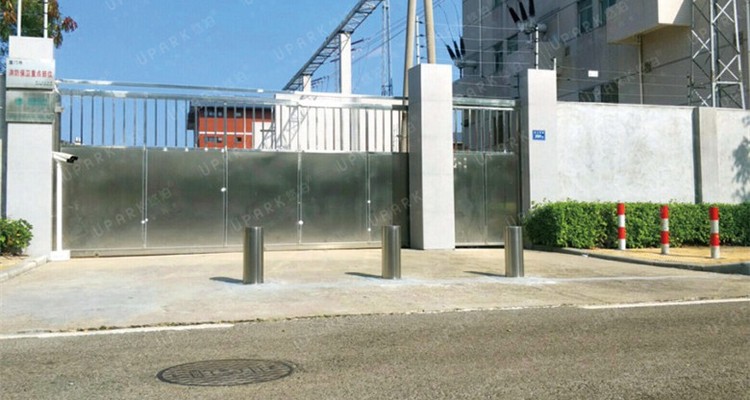
Large data center campuses often span multiple buildings spread across a campus. The outer perimeter needs to prevent unauthorized vehicle access while allowing legitimate traffic through controlled gates. Fixed crash-rated bollards form the foundation of this perimeter, supplemented by fencing and CCTV.
For hyperscale data centers operated by major cloud providers, the threat assessment typically mandates IWA 14-1 M50 or K12 rated bollards at all vehicle access points to the campus. These bollards are tested to stop a 15,000 kg truck at 80 km/h with penetration limited to one meter. They are always deployed, require no power, and cannot be bypassed by cutting cables or jamming electronics.
The fixed bollard installation must be engineered to handle the impact loads transmitted into the surrounding ground. A certified crash test demonstrates that the bollard itself stops the vehicle, but the foundation and surrounding concrete must also be designed to transfer those loads safely.
Protecting Critical Utility Infrastructure
Inside the data center campus, the most vulnerable points are the utility buildings: power substations, generator enclosures, fuel storage, cooling plants, and network fiber entry points. These are the systems that keep the servers running. Take out the power, and the servers go down within seconds unless emergency generators start—and those need fuel.
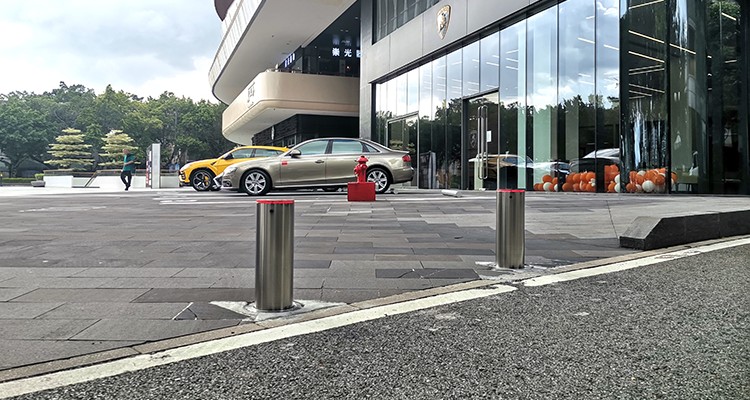
Bollards around these utility buildings are not optional. A vehicle that rams a generator building or ruptures a fuel tank can cause a fire, explosion, or power failure that affects the entire campus. The bollards at these locations should match or exceed the perimeter specification—typically M50 or K12 for facilities with high threat profiles.
For colocation data centers that house multiple客户的 servers in the same building, the utility infrastructure is shared. This means the consequences of a physical attack on power or cooling systems affect everyone in the facility. Colocation operators face pressure from tenants to demonstrate robust physical security, which includes properly specified bollard systems.
Access Control Integration and Redundancy
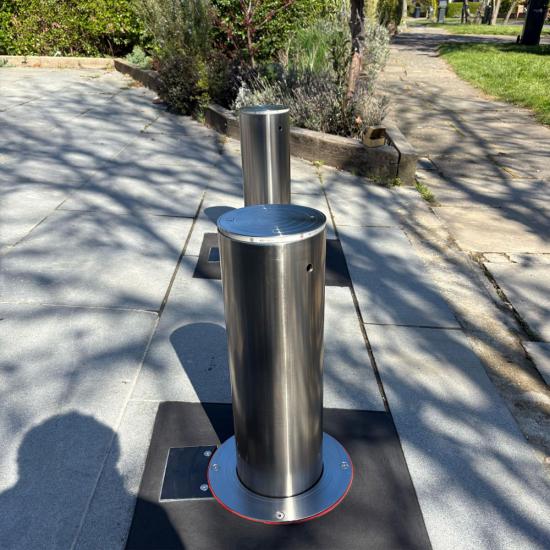
Data center bollards often integrate with the facility's access control system. When an authorized vehicle approaches a gate, credentials are verified and the bollards lower automatically. This automation handles high traffic volumes—delivery trucks, maintenance vehicles, staff parking—without requiring guards at every access point.
The automatic bollards at data center access points need to be highly reliable. Many facilities specify redundant systems: if the primary drive fails, a backup system deploys the bollards. Some operators also keep manual override capability, so that even in a complete electronic failure, the bollards can be raised with a mechanical lever.
For data center operators, physical security is a business continuity requirement, not just a security measure. The cost of bollard installation is trivial compared to the revenue impact of a multi-hour outage caused by a physical breach. Standards like SOC 2 and ISO 27001 increasingly require documented physical security controls, which makes properly installed vehicle barriers a compliance matter as well as a risk management one.
call us :
+86 18206096507 e-mail : [email protected]




 ipv6 network supported