Picking the wrong bollard is an expensive mistake — you either end up with a unit that cycles too slowly for the traffic volume, corrodes within two years, or simply lacks the security rating the site actually needs. This guide walks through the decisions that actually matter when specifying automatic bollards, drawing on UPARK's 10-plus years of electro-mechanical bollard engineering.
What automatic bollards actually are
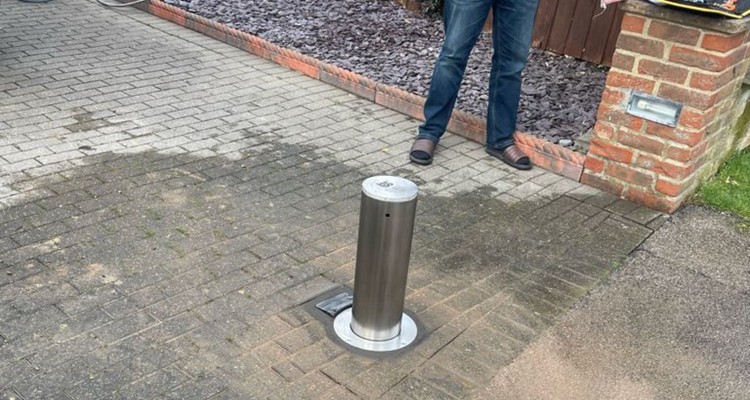
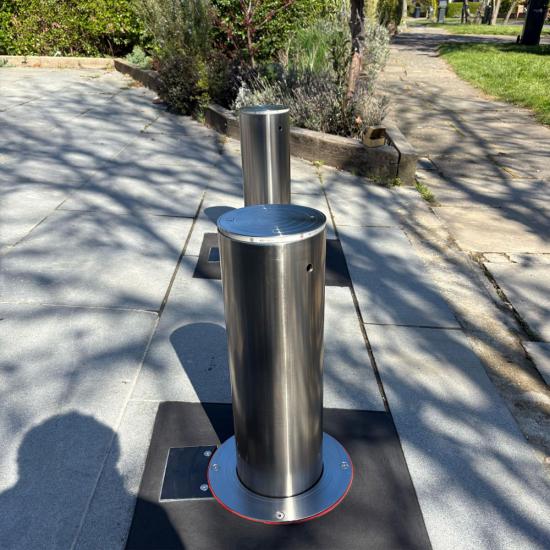
Automatic bollards are motorized posts installed flush with the ground that rise or lower on command. They go by several names: electric bollards, automatic rising bollards, retractable bollards. The key difference from fixed or manual bollards is that they connect to access control systems — license plate readers, remote fobs, traffic lights, mobile apps — and operate without a person standing at the gate.
UPARK's lineup uses an electro-mechanical drive: the motor and mechanical assembly are built as a single sealed unit inside the bollard body. That design cuts maintenance significantly compared with hydraulic systems, which require periodic oil changes, and delivers a faster cycle time with lower noise.
Drive type comes first
Everything else flows from this decision.
Electro-mechanical is the most widely installed type today. The motor and mechanical parts are integrated, so there are no hydraulic lines to leak and no pneumatic compressors to maintain. UPARK's UP-A001 and UP-M001 both use this system. They work well at schools, campuses, shopping centers, and gas stations where the bollard cycles dozens of times daily and staff want minimal maintenance.
Hydraulic bollards use pressurized oil to drive the post up and down. They handle extremely high security loads and provide solid physical resistance to vehicle intrusion. UPARK's UP-M002 is the hydraulic model in the range, and it's specified for embassies, power plants, and other sites where the bollard may actually need to stop a vehicle. The tradeoff is that hydraulic systems need oil inspections and are more involved to service.
Pneumatic bollards run on compressed air and cycle very fast — useful in industrial settings where a gate needs to open and close repeatedly throughout the shift. The UP-M003 covers this use case.
Battery-powered bollards need no external wiring at all. UPARK's UP-A006 runs off a built-in rechargeable battery, which makes it the practical choice for parks, remote checkpoints, or temporary site installations where trenching cable is not feasible.
The short version: electro-mechanical for general access control, hydraulic where vehicle stopping power matters, pneumatic for high-speed industrial cycling, battery where there's no power supply.
Where it goes in matters as much as what it does
Ground-level outdoor bollards take a beating: rain, road dust, temperature swings, and seasonal flooding. Two specs matter here.
IP rating. IP67 means the unit is dust-tight and can withstand temporary submersion. For outdoor bollards in most climates, IP67 is the minimum worth specifying. UPARK's UP-C001 reaches IP67/IP68 — one of the higher ratings available in the product category. That spec came from real-world deployments in coastal cities where standing water after rain is common.
Operating voltage. UPARK's automatic bollards run on 24V. That low voltage reduces electrical hazard risk in wet ground conditions, which is worth noting for any installation near water features or in flood-prone zones.
For material, 316 stainless steel handles coastal and humid climates well. In drier inland locations, carbon steel with galvanized or powder-coated finish is a reasonable budget option, provided the coating is maintained.
Security rating and what it actually means
Most bollards on the market manage traffic — they tell authorized vehicles from unauthorized ones, but they are not designed to physically stop a moving vehicle.
If a site genuinely needs to stop a vehicle — a building entrance, a crowded pedestrian zone, a critical infrastructure perimeter — the bollard needs a crash rating. That means it has been tested to a recognized standard: PAS 68 (UK), IWA 14, or ASTM F2656 in North America. The certification should state what vehicle weight and speed it was tested at. Ask for the documentation.
UPARK's hydraulic series is designed for high-security anti-intrusion use and can be configured to meet the crash rating requirements for a given project brief.
Control integration
A bollard that is slow or awkward to operate creates queues and frustration. The control method should match how the site actually runs.
Remote fobs work fine for small parking lots and private driveways. They are simple and reliable.
License plate recognition makes entry seamless for registered vehicles — no stopping, no fumbling. UPARK's UP-M001 supports LPR as a standard option.
Smartphone and app control is increasingly common for managed parking and residential complexes.
Traffic light integration is standard for school gates and government compound entries where both vehicles and pedestrians share the same controlled zone.
For larger campuses or multi-site deployments, a networked management platform is worth considering. Check whether the manufacturer provides the full control ecosystem or whether the bollard's interface is open enough to connect to an existing access control platform on site.
Cycle speed and daily volume
An 8-to-12-second cycle is fine for a low-traffic side entrance. At a factory gate or bus depot, that speed creates a queue fast. Pneumatic units lead on raw cycle speed; electro-mechanical models have improved considerably and most now operate in the 3-to-6-second range.
Always ask the rated daily cycle count. That figure tells you the design life of the mechanism under normal operating conditions, which matters for maintenance planning.
Power failure behavior
This one is easy to overlook during specification. A bollard locked in the raised position during a blackout blocks emergency vehicles. A bollard locked in the lowered position defeats the security purpose.
UPARK's automatic bollard range includes a manual emergency override so authorized personnel can operate the unit during a power cut. For any safety-critical installation — a hospital entrance, an emergency vehicle access lane — confirm this capability in writing before purchase.
After-sales support
Hardware that cycles thousands of times a year and lives underground needs a service network behind it. Before committing, confirm the warranty period and what it covers, whether spare parts are held locally or shipped from the factory, and response times for service calls.
UPARK holds 60-plus quality certifications and maintains a technical support team with a domestic service network in China. For international buyers, export-market sales and support run through uparkbollards.com.
Comparing the UPARK automatic bollard range
UP-A001 (Electro-mechanical) — schools, campuses, shopping centers, gas stations. High-flow, customizable options.
UP-A006 (Battery) — sites without power supply. Built-in rechargeable battery, fully standalone.
UP-M001 (Electro-mechanical) — schools, government buildings. Supports LPR, mobile app, and traffic light integration.
UP-M002 (Hydraulic) — high-security facilities. Anti-ram design, emergency manual override.
UP-M003 (Pneumatic) — industrial zones, high-frequency gates. Fast cycle time, built for high-volume use.
UP-C001 (Electro-mechanical / Hydraulic / Pneumatic) — schools, government, energy infrastructure. IP67/IP68 full seal, 24V safety voltage.
Making the call
Work through the list in order: drive type, IP and material for the environment, security level, control integration, cycle speed, and service support. Each variable narrows the field. By the time you have answered all six, the right model is usually obvious.
UPARK has been building electro-mechanical rising bollards since 2014, with more than 20 patents and over 60 certifications in the product category. The team handles projects from single-unit parking lot installations to large perimeter systems for government and energy facilities.
To get a recommendation for your specific site, contact UPARK with the location, expected daily vehicle volume, and security requirements. That is enough to start a real conversation about what will actually work.
call us :
+86 18206096507 e-mail : [email protected]




 ipv6 network supported