The term "platform safety barrier gate" covers a range of equipment installed along railway platform edges to prevent passengers from falling onto the tracks. Unlike full-height platform screen doors that enclose the entire platform-to-train interface, safety barrier gates come in several configurations, each designed for specific station conditions, train types, and budget constraints. Understanding these differences is essential for railway operators evaluating platform safety upgrades.
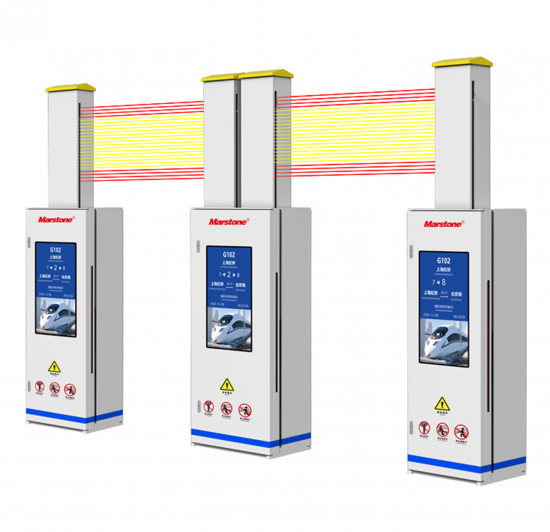
The three main types of platform safety barrier gates are retractable cable barriers, rope-type platform fences, and platform lifting fences. All three share the same core principle: they deploy a physical barrier when a train is not at the platform and retract or lift to allow passenger boarding when a train arrives. But their engineering details, installation requirements, and performance characteristics differ significantly.
Retractable cable barriers, also called cable-operated platform barriers, use multiple stainless steel or nylon cables running between telescoping posts. The UPARK system, for example, uses six 5mm 304 stainless steel cables rated at over 10 kilonewtons each, with a maximum span of 25 meters between posts. These systems are best suited for high-speed rail and metro stations where platform configurations are relatively standardized and the priority is wide coverage with minimal posts. The cables rise and fall in 4 to 8 seconds, adjustable in 0.1-second increments, and the entire mechanism requires only a C30 concrete edge of 150mm thickness.
Rope-type platform screen doors, pioneered by JR West in Japan and now deployed at 9 stations across 17 platforms, use horizontal ropes made of carbon strand rods or stainless steel wire. The ropes descend from a slim housing just 250 millimeters deep to form a barrier, then retract upward when the train stops. The key advantage is an extreme stop tolerance of ±1,000 millimeters, meaning the system works even when trains stop a full meter off target. The maximum opening width is approximately 13 meters, limited by the rope sag characteristics. Installation depth is minimal, making this option attractive for stations with tight platform space.
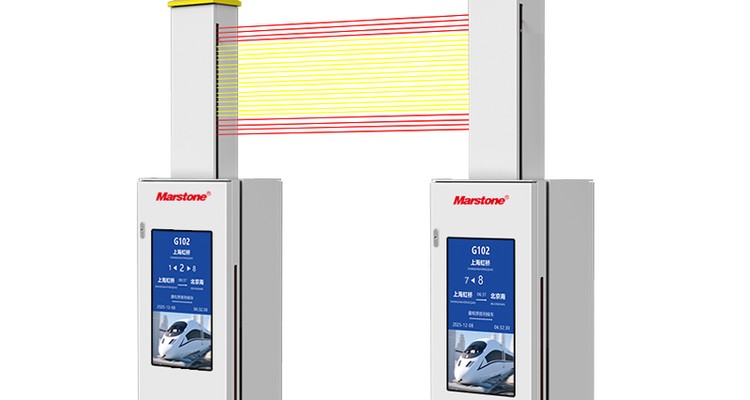
Platform lifting fences, a third category found primarily in the Chinese and Southeast Asian markets, use rigid bars or a combination of bars and cables rather than flexible ropes. The housing is typically larger—around 480 millimeters deep—but the span can reach 25 meters, comparable to cable barriers. These systems often include integrated passenger information displays and multi-level control architectures. The trade-off is a slightly larger equipment footprint on the platform.
The control systems for all three types follow a similar hierarchy. Local manual control (LCB) has the highest priority, allowing station staff to override automated commands in emergencies. Below that are unit-level control, platform-level control (PSL), remote emergency control, and system-level automatic control driven by train signaling. Most modern systems support Modbus TCP communication and can integrate with existing ATO (Automatic Train Operation) and SCADA platforms through voltage-free dry contacts.
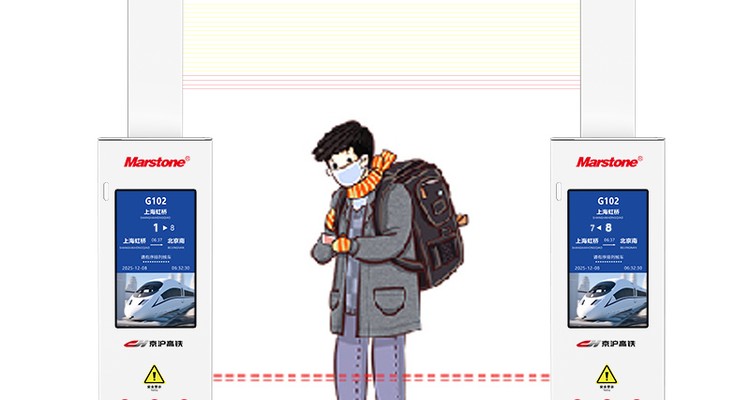
Cost is a major differentiator. Retractable cable barriers and platform lifting fences generally cost 30 to 50 percent less than full-height PSD installations, with installation completed in one to two weeks rather than the months required for glass screen door retrofits. Rope-type platform fences, with their customized box configurations for specific train types, tend to cost more per meter but require less structural modification to the platform edge. All three options avoid the high cost of precision track alignment and door-matching sensors that PSDs demand.
Selection depends on three factors: platform geometry, train variability, and budget. For stations with standardized train types and moderate stop accuracy, retractable cable barriers offer the best balance of cost, span, and simplicity. For stations with extreme train variability—different door configurations, varying train lengths—rope-type fences provide the widest stop tolerance. For retrofit projects where platform reinforcement is not feasible, lifting fences with their floor-mounted base plates and expansion bolt installation may be the most practical choice.
Regardless of type, all platform safety barrier gates must meet relevant safety standards. The UPARK system holds SIL2 certification, while the control electronics meet IP54 protection. Structural components are designed to withstand ±3,000 Pa wind pressure with less than 10mm of elastic deformation. Cable breaking strength exceeds 15,000N, and safety features include obstacle detection (adjustable to three consecutive detections), audible and visual alarms, and automatic fail-safe positioning if power is lost.
Railway operators evaluating platform safety should consider how these different barrier types map to their specific station conditions. There is no universal best solution, but there is almost certainly a platform safety barrier gate configuration that fits. The growing adoption of retractable barriers across Asia, from Japan’s 17-platform deployment to China’s coverage of 70-plus cities, confirms that these systems have moved beyond experimental status and into mainstream railway safety practice. For more on specific system specifications, see our retractable cable barrier technical guide and related platform safety products.
call us :
+86 18206096507 e-mail : [email protected]




 ipv6 network supported