Light rail systems have a safety problem that full-height platform screen doors can't solve. The issue comes down to stopping precision. Metro and heavy rail trains stop within ±5 centimeters of their target position every time. Light rail vehicles? Their stopping accuracy ranges from ±20 to ±30 centimeters. That gap sounds small, but it's enough to make platform screen doors (PSDs) impractical for most LRT stations.
Here is why. PSDs require the train doors to align precisely with the platform doors before either can open. When a train stops 30 centimeters off from its mark, the doors don't line up. Passengers end up trying to squeeze through a narrow gap, or the system refuses to open at all. Either way, it's a safety hazard rather than a safety feature.
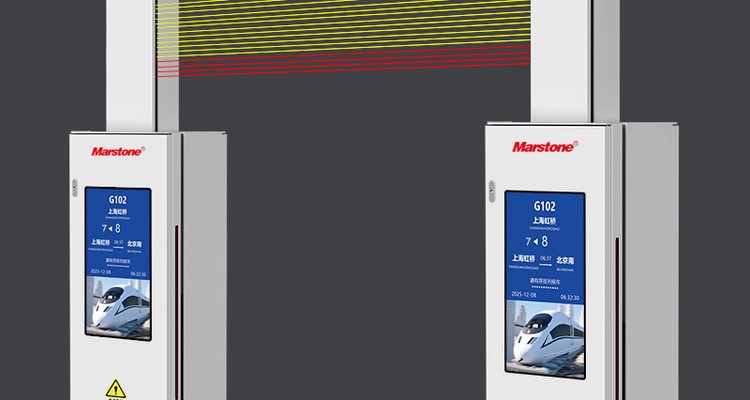
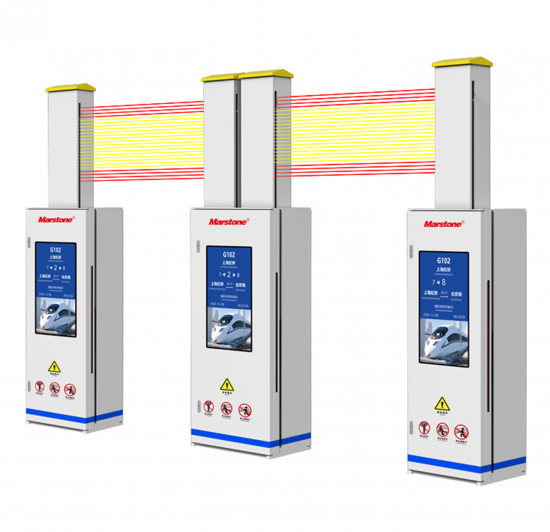
This is where retractable cable barriers come in. Instead of rigid glass walls with aligned doors, these systems use six stainless steel cables that rise and fall on demand. When a train is not at the platform, the cables form a barrier over two meters tall, preventing anyone from reaching the track edge. Once the train arrives and stops, regardless of exact positioning, the cables lower below 1.4 meters, and passengers board freely through any door along the platform.
The difference matters for light rail. Because cable barriers don't require door-to-door alignment, they work with any stopping accuracy. A train can be 30 centimeters early or late, and boarding proceeds normally. No sensors to calibrate, no alignment mechanisms to maintain, no service delays from minor positioning errors.
Singapore's LRT system proved this approach. When the Land Transport Authority needed to upgrade platform safety on its light rail lines, full-height PSDs were ruled out early. The LRT's stopping precision of ±30 centimeters made glass screen doors unworkable. After evaluating options, the authority installed retractable cable barriers manufactured by UPARK (model ACG-DST-S-DCZT). The system has been operating reliably, providing the same fall-prevention and intrusion-deterrence as PSDs without the alignment constraint.
The technical case for cable barriers on light rail platforms goes beyond stopping tolerance. Each barrier unit reaches a full height of 2.7 meters when raised, with the cable section forming a barrier over two meters tall, enough to prevent climbing. The cables are 5mm diameter 304 stainless steel, each rated for over 10 kilonewtons of tension. That is not something a person can push through or cut quickly. The system raises and lowers in 5 to 8 seconds, adjustable to match platform operating schedules. It holds a SIL2 safety integrity rating, the same level required for many mainline rail applications.
The control architecture offers five levels of operation. System-level control manages the entire station. Platform-level control handles all units on one side. Remote emergency control can raise or lower barriers from a central location. Unit-level control addresses individual sections. And local manual control (LCB) takes priority over everything else, so maintenance staff or station operators can always override automated commands. For related perimeter security solutions, see automatic fence gates.
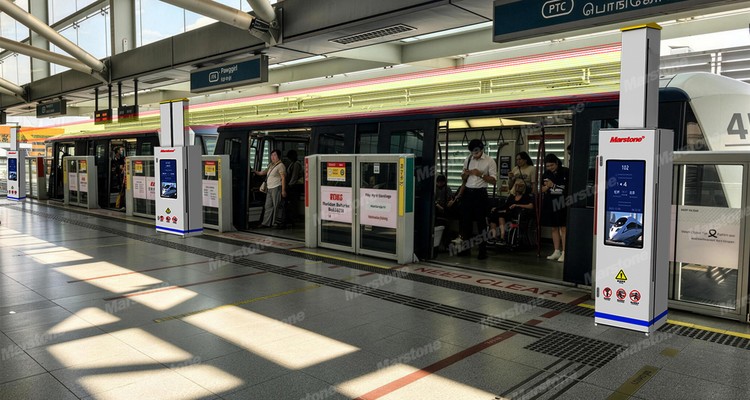
In terms of cost, the gap is significant. Full-height PSD installations on light rail platforms typically run two to three times the cost of cable barrier systems. PSDs require precision track infrastructure, embedded sensors, and ongoing calibration to maintain door alignment. Cable barriers need a concrete platform edge of C30 grade or above, with a minimum thickness of 150 millimeters, which is standard for most LRT stations. Installation is simpler, and maintenance involves fewer moving parts.
The communication system runs on dual-redundant Ethernet with CAN bus backup, using Cat 6 cabling throughout. Each barrier section includes a 32-inch, 1080p display at 2000 nits brightness for passenger information, showing train arrival times, carriage numbers, and platform status. This PIS (Passenger Information System) integration is built into the barrier units themselves, not bolted on as a separate installation.
Light rail operators in Asia and Europe are taking notice. The combination of lower installation cost, tolerance for imprecise stopping, SIL2 safety certification, and built-in passenger information makes retractable cable barriers a practical alternative to PSDs for any LRT platform where door alignment cannot be guaranteed. You can also read about how railway platforms are switching from screen doors to cable barriers.
For light rail systems that want platform safety without the constraints of screen doors, the cable barrier approach offers a straightforward answer. You get the barrier when you need it, and open access when the train arrives, no precision required.
call us :
+86 18206096507 e-mail : [email protected]




 ipv6 network supported